A continued year-over-year decline in the September 2026 resale market coupled with a sharp increase in new listings could signal where the market is heading, according to the latest monthly report from the Ottawa Real Estate Board.
The market has been balanced for some time, tilting in favour of neither buyers nor sellers. With sales slipping through most of 2026 compared to last year and new listings increasing, the advantage may be shifting to buyers, who now have a greater choice, and away from sellers, who are faced with increased competition. Sales and listings during the coming months will provide a clearer picture of the resale market.
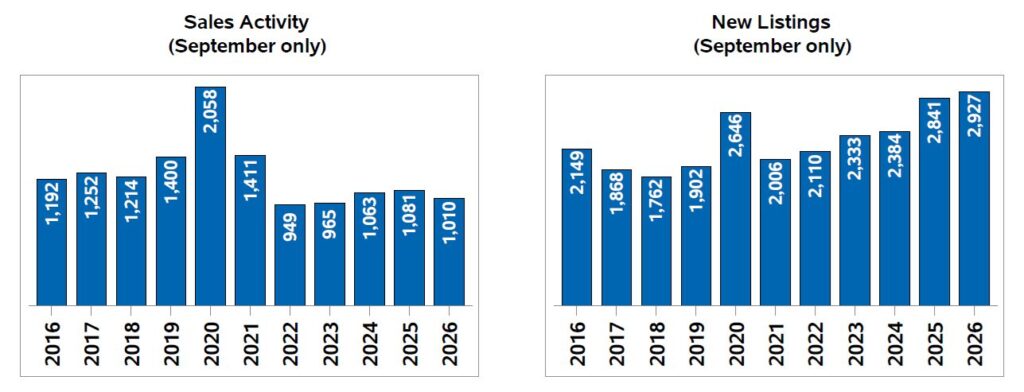
In September, Realtors sold 1,010 homes through the board’s Multiple Listing Service (MLS). That was down more than six per cent compared to the same month last year. However, it was up marginally from August, bucking the trend of the past decade, which has mostly seen a decline in sales from August to September.
Sales in the three-month period of June to August made it the third lowest summer total since 2016, said the board in its report.
Year-to-date, Realtors have sold 10,288 homes, down almost seven per cent from the same period in 2025.
Prices, listings & inventory
The average price for a single-family home in September was $823,449, down about three per cent from the same month last year. Townhomes sold for an average of $543,337 and condo apartments averaged $431,645, a decline of three per cent and one per cent, respectively.
There were 2,927 new listings in September, up three per cent from a year earlier and up 38 per cent from August. Some increase is normal as the fall market begins, but the median August-to-September increase over the previous 10 years was just under 12 per cent, noted the board.
Active listings in September reached 4,813. This was the second-highest level for the month level since 2016.
Ottawa’s suburban areas accounted for nearly three-quarters of all September sales, said board president Tami Eades in a statement. “At the same time, the downtown and rural areas continue to see more volatility with a widening gap between the number of homes coming onto the market and the number selling.”