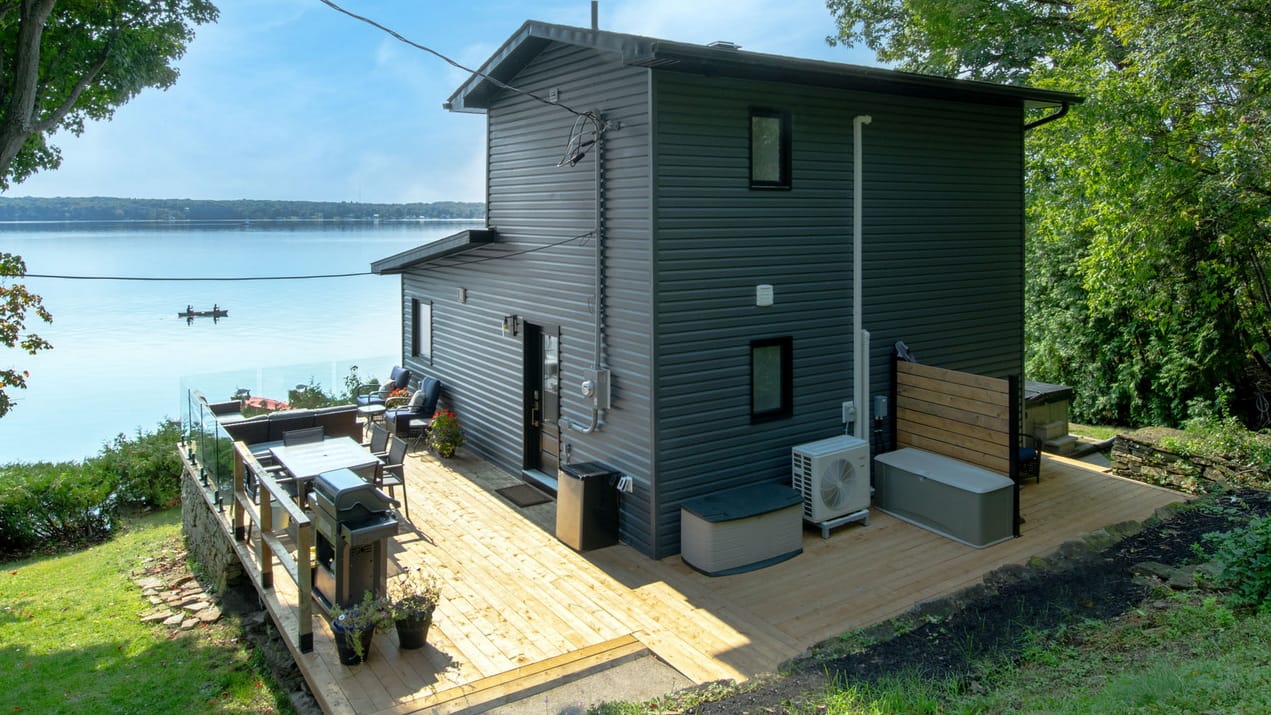
Most outdoor spaces look fine. A deck. A set of chairs. Maybe a string of lights someone put up a few summers ago.
But there’s a difference between an outdoor space that exists and one that fits and becomes part of how you actually live. The difference isn’t the budget; it’s the decisions made before a single board gets laid.
In this column you’ll find:
- How to start with function before finishes.
- How layered lighting unlocks your space after dark.
- Which materials hold up in Ottawa’s climate, and what’s working right now.
Start with how you want to use it
The most important design conversation isn’t about materials or finishes. It’s about function.
Do you host company or want somewhere quiet to start the morning? Maybe you have kids and dogs who need room to run or a view you want to protect? Those answers narrow everything down: layout, materials, lighting, storage. They make every selection easier. When a homeowner comes in with a clear end goal, whether it’s storage, view, family time, or pet play, having a goal makes narrowing down their space and material selection easy for your designer.
One detail worth thinking about early is storage. Something as straightforward as a bench with built-in storage pulls double duty: extra seating for guests and a home for everything the backyard actually needs. That’s what intentional design looks like: function and form working together from the start.
Lighting: What unlocks a space after dark
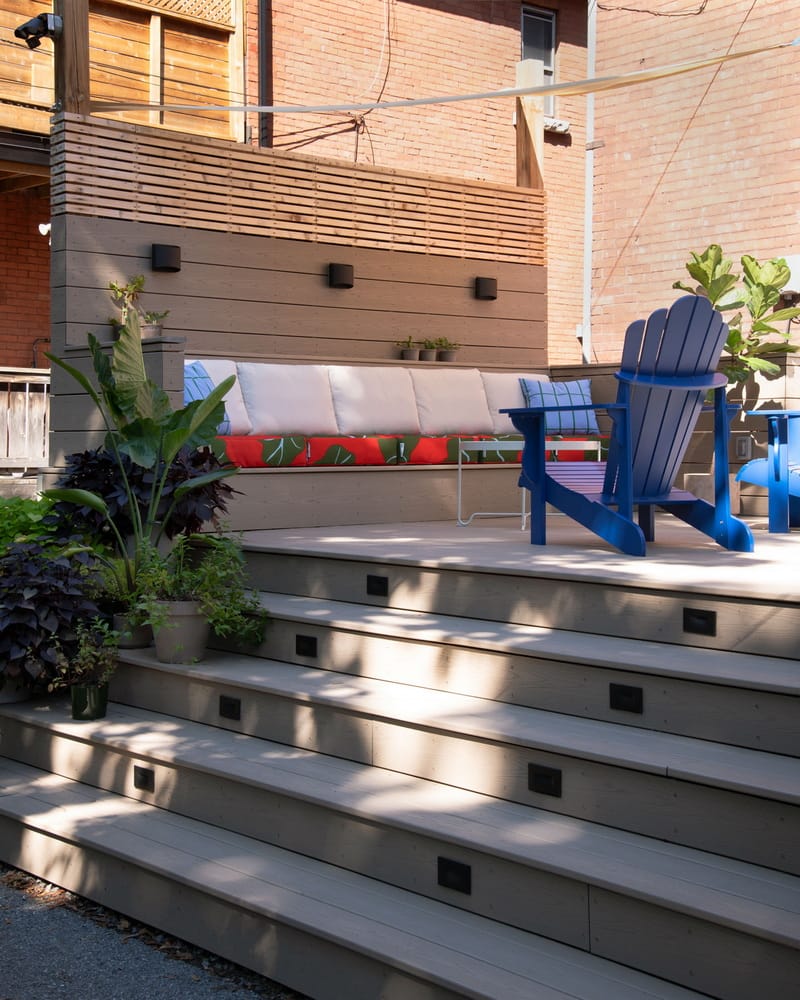
A well-designed outdoor space shouldn’t stop working when the sun goes down. But for a lot of homeowners, that’s exactly what happens because lighting was treated as an afterthought.
I see it often. Lighting is one of the strongest factors in whether homeowners actually use their outdoor spaces after dark, and a couple of soffit lights won’t cut it for a late-night swim or a backyard barbecue that runs past dusk.
- Atmosphere: String lights, hanging pendants and built-in linear strips shift the mood and make guests want to stay out longer.
- Function and flow: Fixtures built into patio stones or garden beds guide people through the space safely without harsh overhead light.
- Curb appeal: Sconces, up-lighting and soffit fixtures can completely change how a home’s architecture reads at night. They’re the same materials, just seen in a whole new way.
Materials that hold up and look good doing it
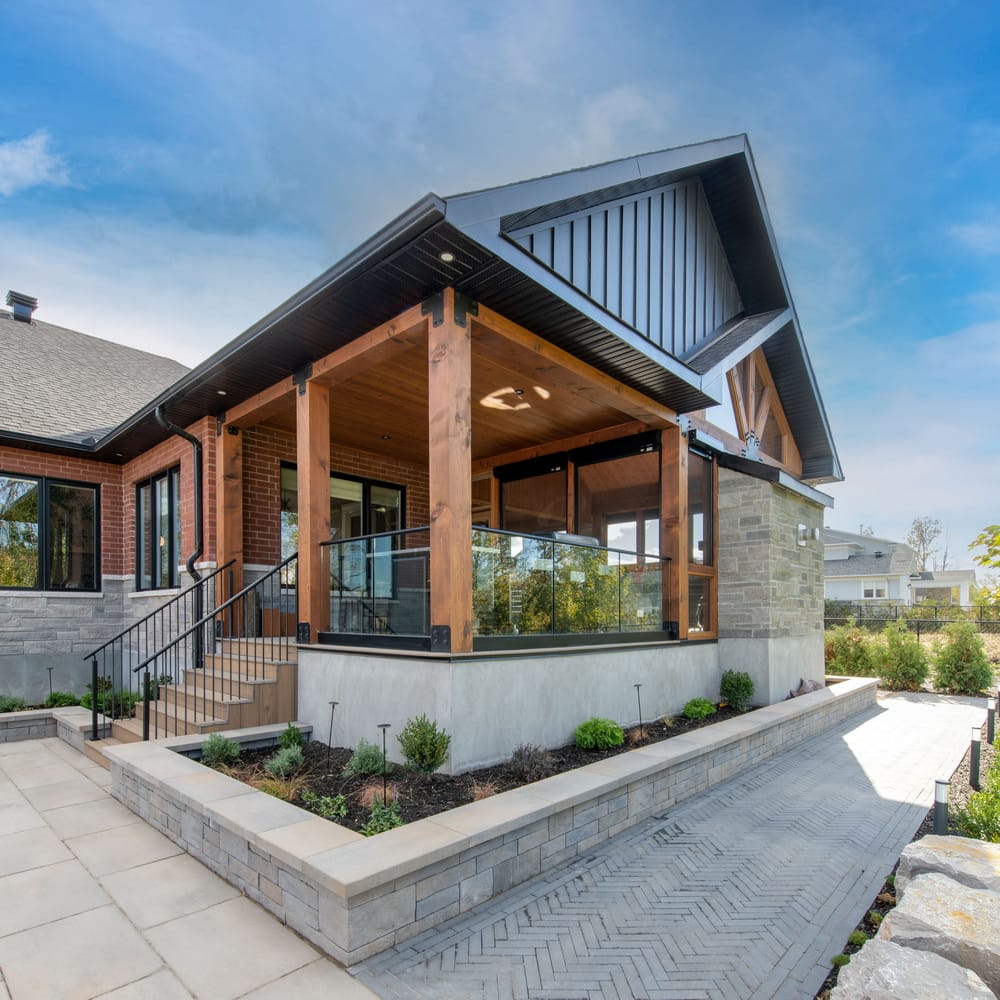
- Composite decking: The case for longevity
In Eastern Ontario’s climate, wood decking takes a beating. Freeze-thaw cycles, rain, humidity: Over time, untreated wood greys out, warps and starts to break down. It’s not a question of if; it’s when.
The weather eats away at wood over time, making it turn grey and rot, especially with Ottawa’s winters and rain. Composite just isn’t affected the same way. It holds up and keeps looking new far longer.
The best thing about a composite deck isn’t how it looks on day one. It’s how it looks five years in.
- Railing: The choice Is more personal than you think
Railing selection comes down to how you actually use the space: whether you’re protecting a view of the Ottawa River, adding privacy from close neighbours or thinking about how a surface will hold up after a week of kids and dogs.
- Do you have a view? Glass keeps sightlines open and lets the landscape do the work.
- Are you looking for privacy? A wood option creates a more enclosed, sheltered feel.
- Do you have kids or pets? Think about how a surface will hold up to daily contact and what it will look like six months from now.
The best railing is the one designed around your space and the people in it.
What’s working right now
One pairing I keep coming back to is a warm wood-grain composite deck with a black aluminum railing. It works across both modern and contemporary homes and balances warmth with durability; two things Ottawa homeowners consistently prioritize.
Intentional design stays with you
A space designed around how you live doesn’t just look better; it gets used more. It becomes the spot guests drift toward, the place you end up on a Tuesday evening without really planning to.
If you’re thinking about an outdoor project this season, opt for a design professional who can walk through your space with you and help you make sense of what’s possible for your yard, your lifestyle and your budget.
