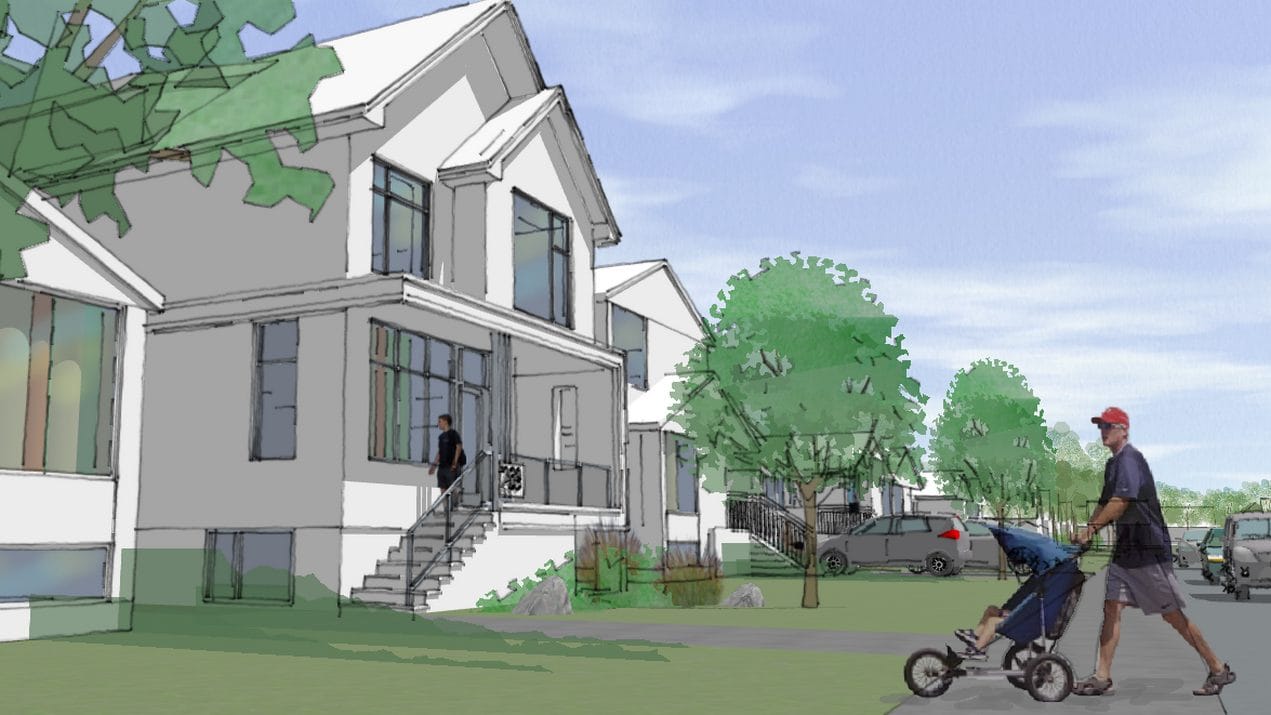
Gas prices are on everyone’s mind these days. Supply shocks from global conflict have pushed fuel costs to levels that are forcing people to rethink how they get around, and prompting planners to revisit a long-standing question: when does a neighbourhood become dense enough to give people a real choice to rely on cars less?
The answer, it turns out, has a measurable threshold. Once residential density crosses a critical point, car dependency drops off sharply.
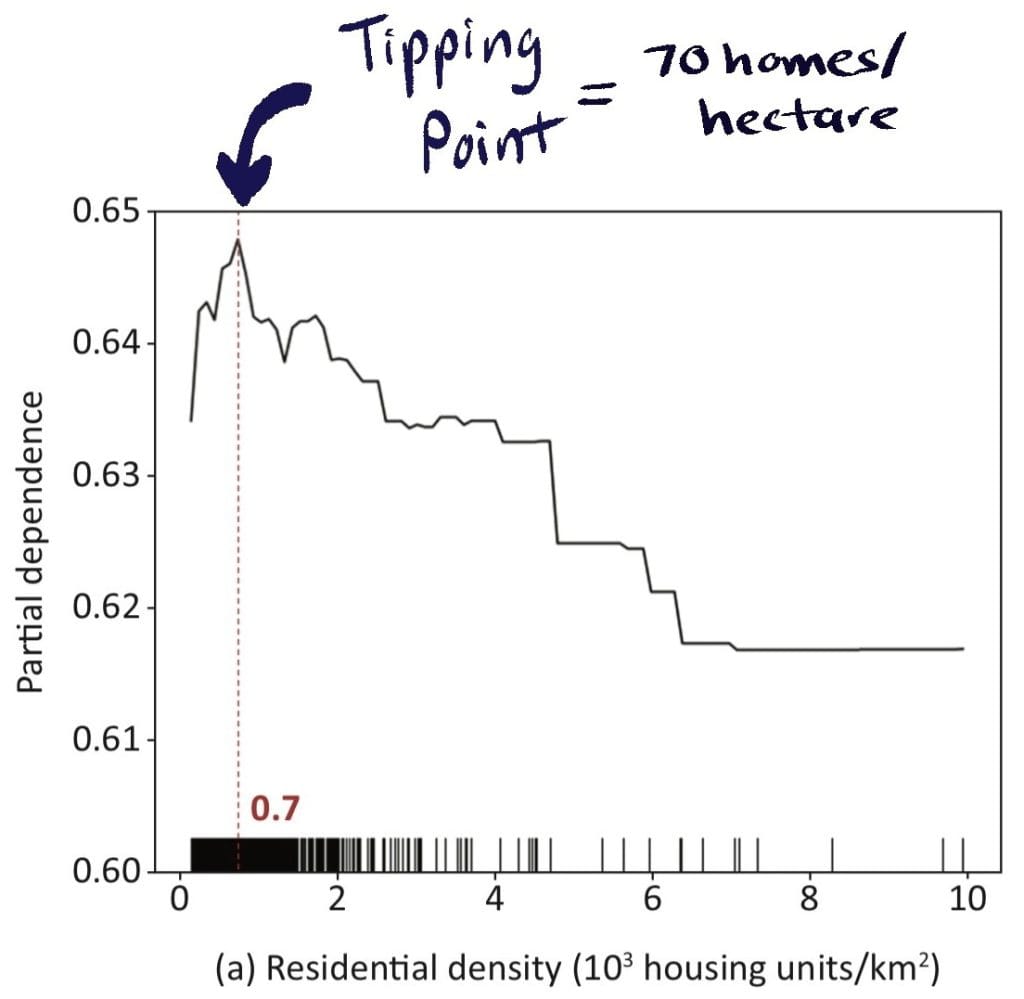
According to a recent study that analyzed travel data from 82 cities and towns in the Puget Sound, Wash., region of the United States, neighbourhoods began to show reduced car dependence at around 70 housing units per hectare. That region is much like many in Canada, with a dense core city and surrounding mid‑sized, car‑dependent communities working to balance intensification, transit and climate action.
At this level, car dependence begins to decline, transit becomes financially viable, local retail can sustain consistent foot traffic, and investments in cycling and pedestrian infrastructure start to pay off. Below that threshold, none of these systems work, not because residents don’t want them, but because the density simply can’t support them.

A comparison of three Canadian neighbourhoods — Rosemont-La Petite-Patrie in Montreal, Que., Centennial in Oshawa, Ont., and Erin Woods in Calgary, Alta. — reveals a similar pattern in residential density and walkability and reinforces the idea that neighbourhoods generally need to exceed 70 units per hectare to function as truly walkable places.
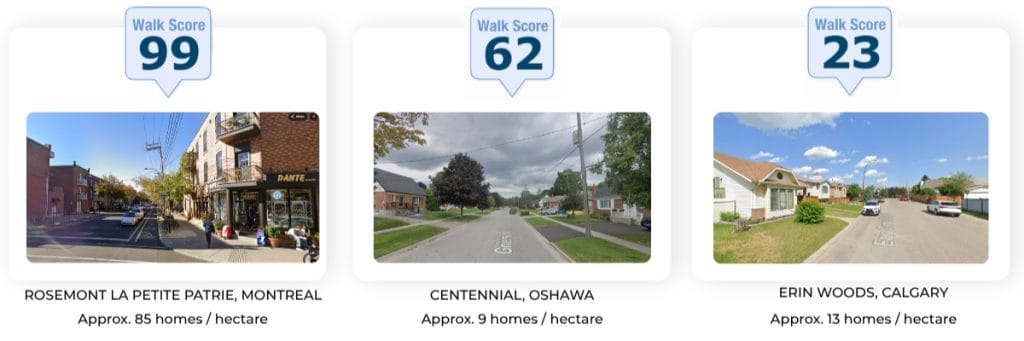
These low-density, Canadian neighbourhoods were designed around the automobile, characterized by post-war lots, detached homes, and densities hovering around 10-15 dwellings per hectare. That design made sense in the 1960s, but today these neighbourhoods are a huge fiscal drain on their municipalities in order to maintain infrastructure like pipes, roads and parks. The tax base is spread thin, and many have infrastructure that’s in deep need of repair.
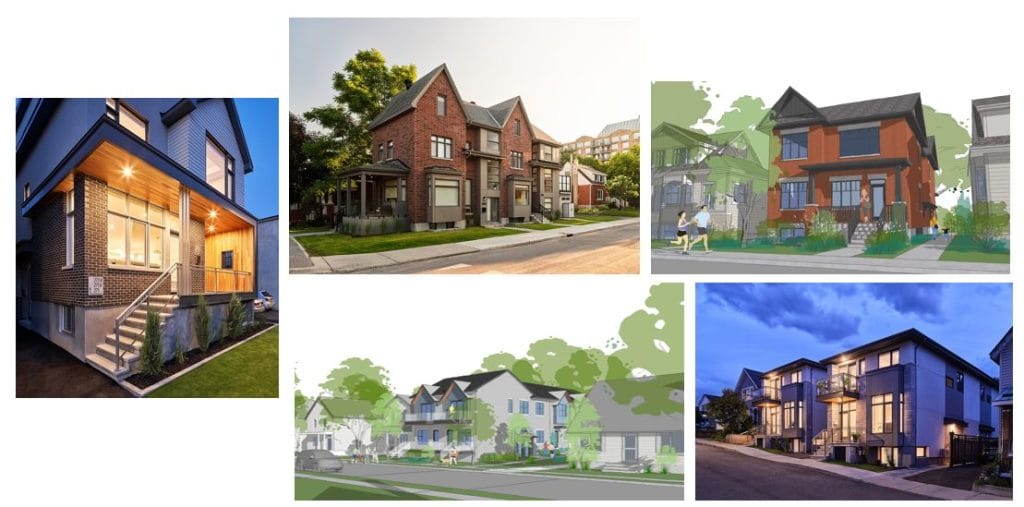
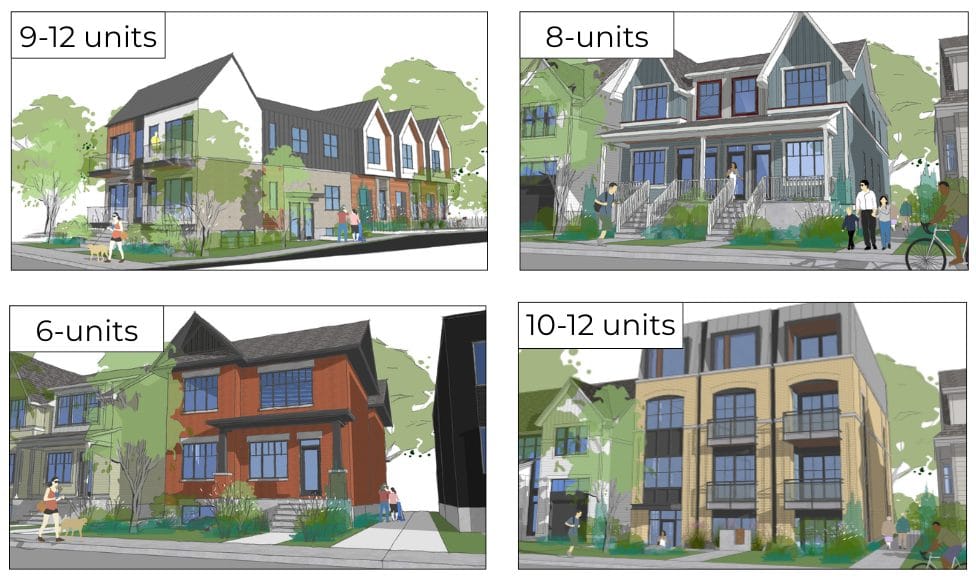
Neighbourhoods like this hold enormous untapped potential for infill. If we tweak the rules to make it easier to build compact, two- or three‑storey buildings with four to 12 units, these areas could more than double the number of people they can house over the next 20 years.
A handful of forward-thinking municipalities have moved to upzone their low-density neighbourhoods to do just this. However, they didn’t reverse-engineer their regulations, taking into account market response, so the infill housing supply outcomes vary and are sometimes disappointing.
In some municipalities, these upzonings have been contentious. In Calgary, broad upzoning across entire residential zones triggered significant backlash, and regulations have been repealed. In Edmonton, pushback has resulted in modifications that cripple some development opportunities.
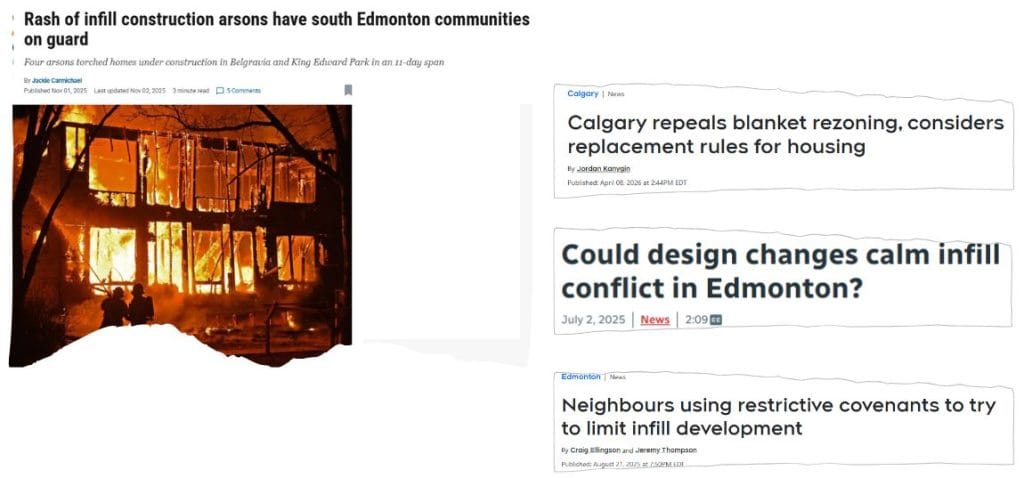
Design quality was another hot‑button issue. Some infill buildings had little consideration for the human scale and their impact on the surrounding neighbourhood, featuring blank façades, small windows and small or absent balconies and porches. Lively streets depend on seeing other people and signs of life — think large windows, green space, gardens and porches or balconies where people sit and watch the world go by.
In other cases, upzoned lots sit vacant because developers simply can’t make the business model work.
These are not impossible problems. They are, however, problems that require deliberate regulatory design, not just a change in permitted densities.
It’s time to take a more targeted approach to overcoming these challenges. Rather than relying on blanket upzoning, municipalities should focus zoning changes on areas best suited for infill. This allows them to preserve the broader zoning framework while minimizing widespread community opposition.
To ensure new development complements low-rise neighbourhood character and contributes positively to the public realm, façade zoning is essential. When applied strategically, targeted zoning can be reverse-engineered to create the conditions needed for viable business models and to meaningfully accelerate low-rise infill development.
The good news is most municipalities are closer than they realize to that density tipping point where neighbourhoods can begin to function as truly walkable places. Reaching that threshold doesn’t require a sweeping rewrite of zoning bylaws or years of contentious public consultation, but rather a more precise and deliberate approach to infill housing.