A bur oak sets a high bar.
The majestic tree, a protected species native to this region, soars 30 metres or more, suggesting an aspirational nature. Its massive diameter — as much as three metres — signals presence and strength. Living 200 to 300 years or longer, it embodies endurance.
And, despite its size, the tree possesses a quiet dignity.
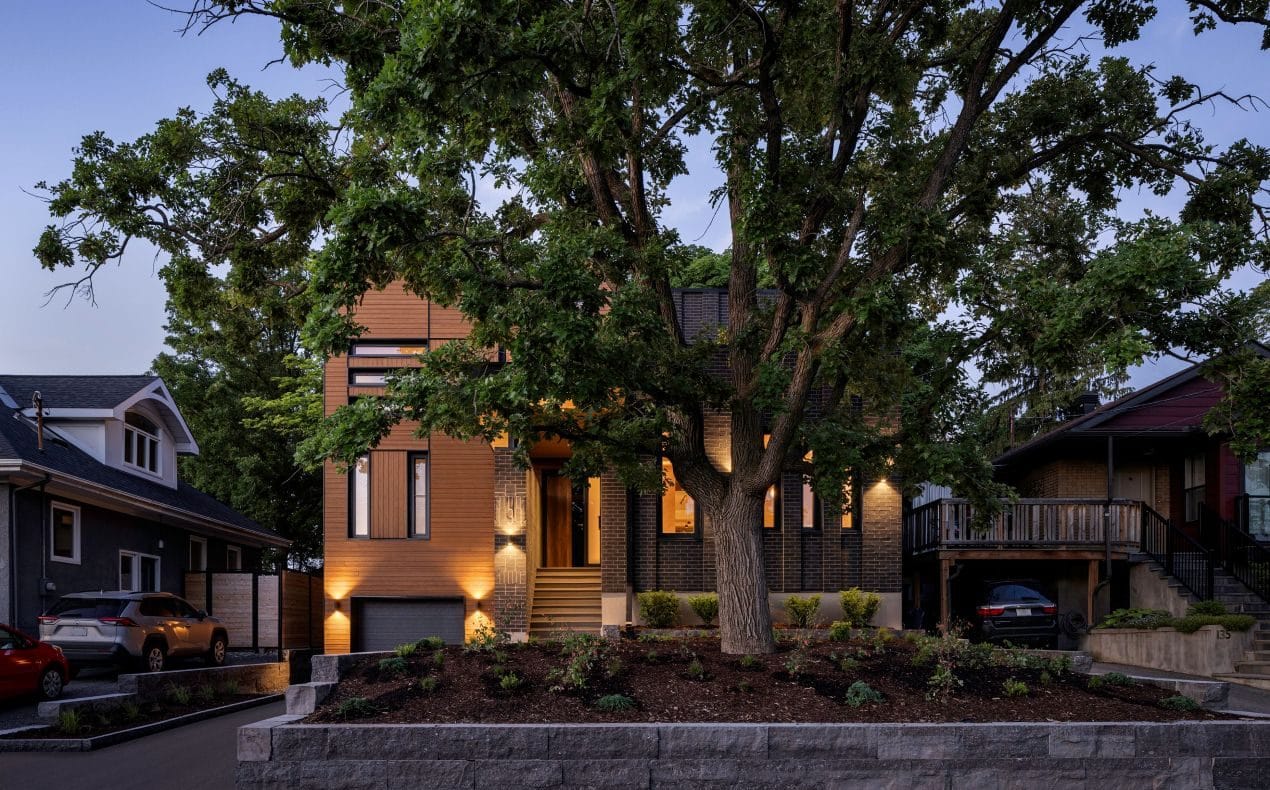
A modern-themed house in Champlain Park that was a winner of a custom home award and finalist in two other categories at the 2024 Ottawa Housing Design Awards lives up to the bar set by the spreading bur oaks in the front and rear yards.
At 5,485 square feet including the finished basement, the four-bedroom home is far from small. But its architecture and placement on the lot, where it replaced an older bungalow, afford the privacy and unimposing appearance its owners sought when they hired Linebox Studio to design it.
The way one part of the home steps back from the street, the alternation of horizontal and vertical windows, the mix of wood and dark brick cladding, the playful rhythms of the brick insets, the magnificent bur oak out front: it all helps the home — the exterior of which was a finalist in the awards — fit comfortably on an older street where a number of other modern homes also stand.
Just as importantly, the house incorporates sustainability to its core, according to Linebox architect Josée Anne Pronovost.
“They are one of the most thoughtful clients we’ve ever had in the sense of whatever we did, every decision we made, the question was always, ‘What’s the sustainable aspect to this? What’s the longevity of this product, this method, and can we make it better? Can we increase the longevity? They were aiming for, I don’t even want to say 100 years, but like a 200-year-old home.”
“Construction is a very wasteful, resource-intensive and environment-damaging activity,” says one of the homeowners, who prefer to be unnamed. “Our goal was to partially offset this negative impact on the environment by building something that lasts a very long time.”
That insistence on sustainability led to the extensive use of cross-laminated timber construction (CLT), a form of engineered wood with a low carbon footprint and excellent thermal, acoustic and other properties. Craned into place, CLT was used not just for structural elements such as floor and roof slabs but also for the exterior envelope and the main loadbearing interior walls.
Triple-paned windows, extra insulation, a heat pump and other components also contribute to the home’s sustainability.
Harmony with the environment dictated construction decisions as well, according to Antonio Sanchez of Sanchez Homes, which built the home.
For instance, a 12-foot radius was established around the front oak where no work was permitted. “You couldn’t even lean a piece of insulation on that tree.”
Craning the CLT into place also saved the tree’s roots from the impact of standard building methods and equipment.
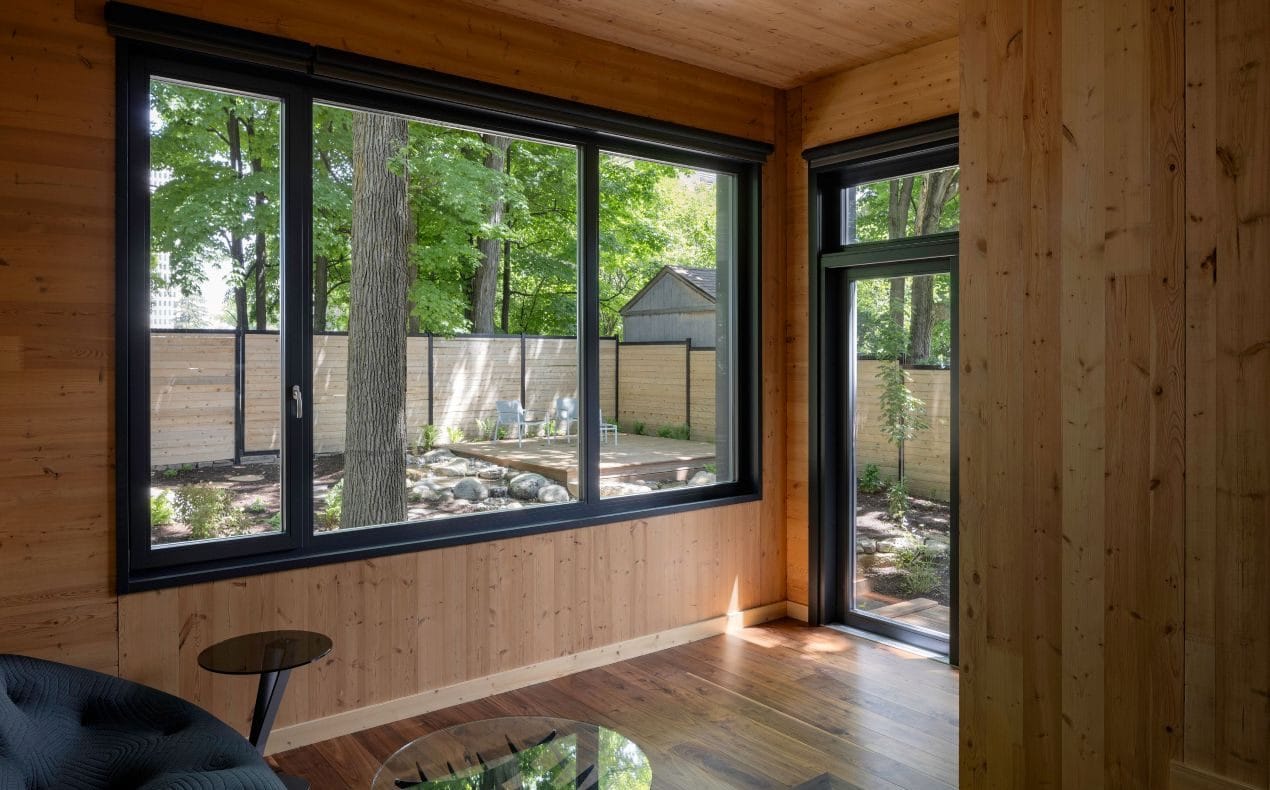
The rear of the home, which contains the main living areas, was erected on piers to avoid damaging the roots of the backyard oak. First, however, the roots were hydro vacuumed to remove dirt and debris and forestry experts then wrapped the roots in burlap to avoid damage during construction.
“The clients put in a lot of energy and cost to ensure that those trees were protected,” says Sanchez. “And now, when you’re in the home and you look out, you really don’t feel like you’re in the city. You look out and it’s just trees everywhere.”
“We love trees,” says the homeowner, who notes there are also sugar maples in the front and rear yards. “Trees transform the environment around them. They are a beautiful sight, ever changing throughout the seasons. They bring shade and cool to our living spaces. They inspire us through their exceptional resilience. Each tree tells a story, year after year.”
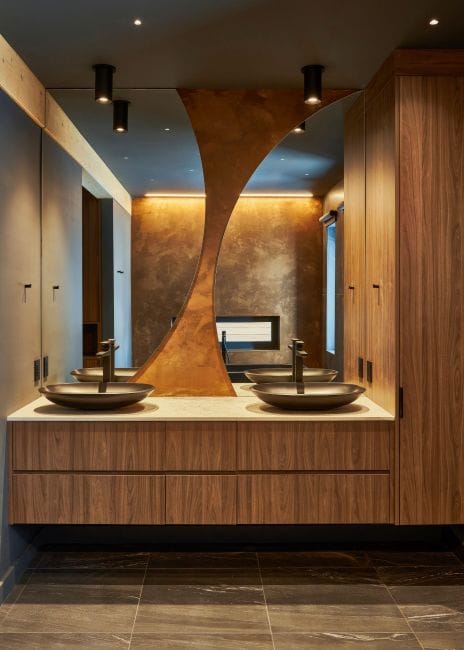
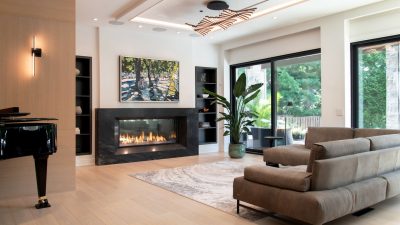
Inside the home, which includes a rooftop patio with a view of the Ottawa River, wood sets the tone. Exposed sections of CLT wall panels, a wood inset in the kitchen ceiling and dark walnut floors and stair treads lend warmth and character to the spaces.
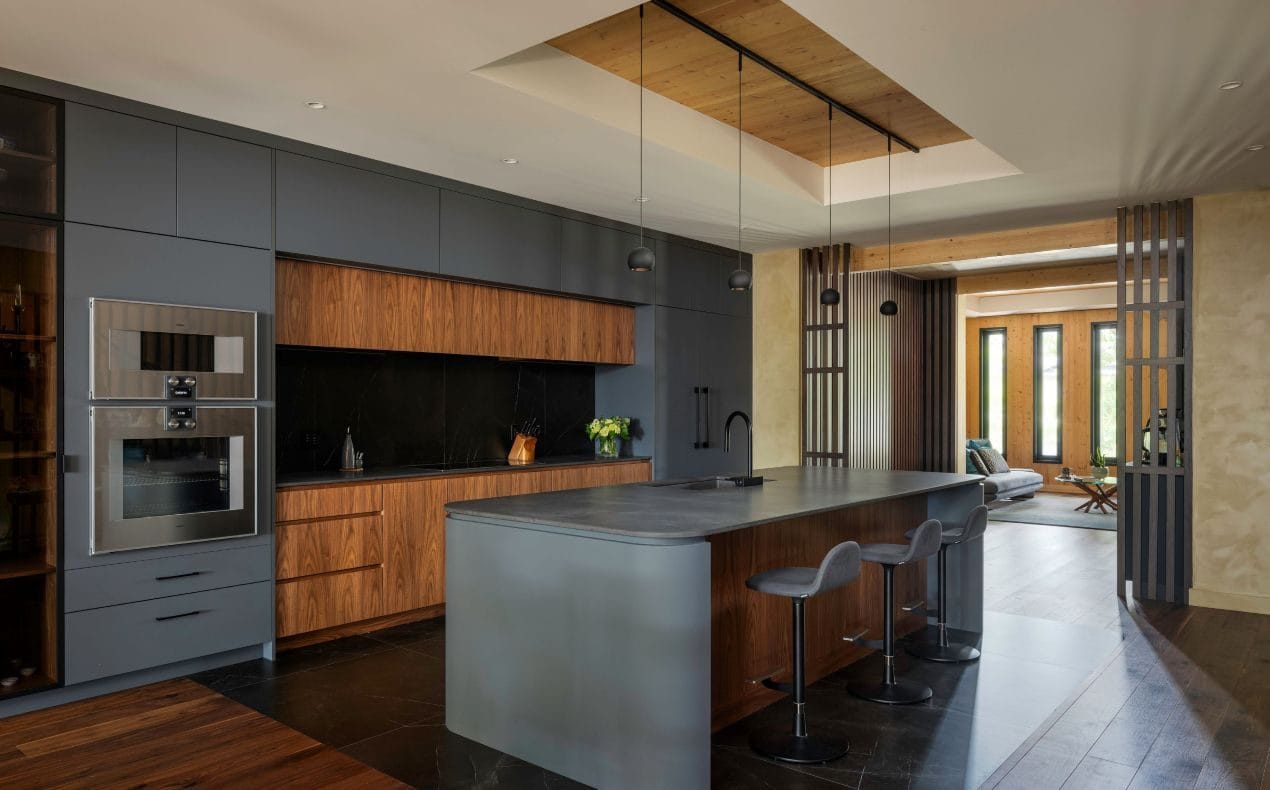
The kitchen, which was one of the finalists in the housing awards, connects visually with a backyard bur oak through the large windows in the adjacent dining room. Sleek, simple and spacious, the kitchen features a cabinet wall containing all the storage and appliances, a large island with plentiful work and seating space, and contrasting dark grey and black surfaces against wood tones that make for a tranquil space.
The rounded edges of the island and porcelain tile flooring, along with the light fixtures and kitchen furniture selected by the homeowners, help soften the linearity that characterizes the home’s interior. That softness is a “welcoming feature” and contributes to the moody serenity of the space, says Pronovost.
“You start your morning and you’re mellow.”
Subtle transitional features define the main living area’s zones, including an illuminated glass cabinet where the kitchen meets the dining room and a coffee and tea bar that separates the kitchen from the front room.
Creating a visual connection between the home’s multiple levels, a striking staircase that appears to float runs from the basement to the rooftop. Black metal slats define the staircase while allowing illumination to penetrate from higher floors and create a mix of light and shadow.
Asked about his favourite feature of the home, Sanchez says: “The sense of quiet. You can’t hear anything. Nothing. You could have a truck go by and it’s so quiet.”
Rather like being in a forest.