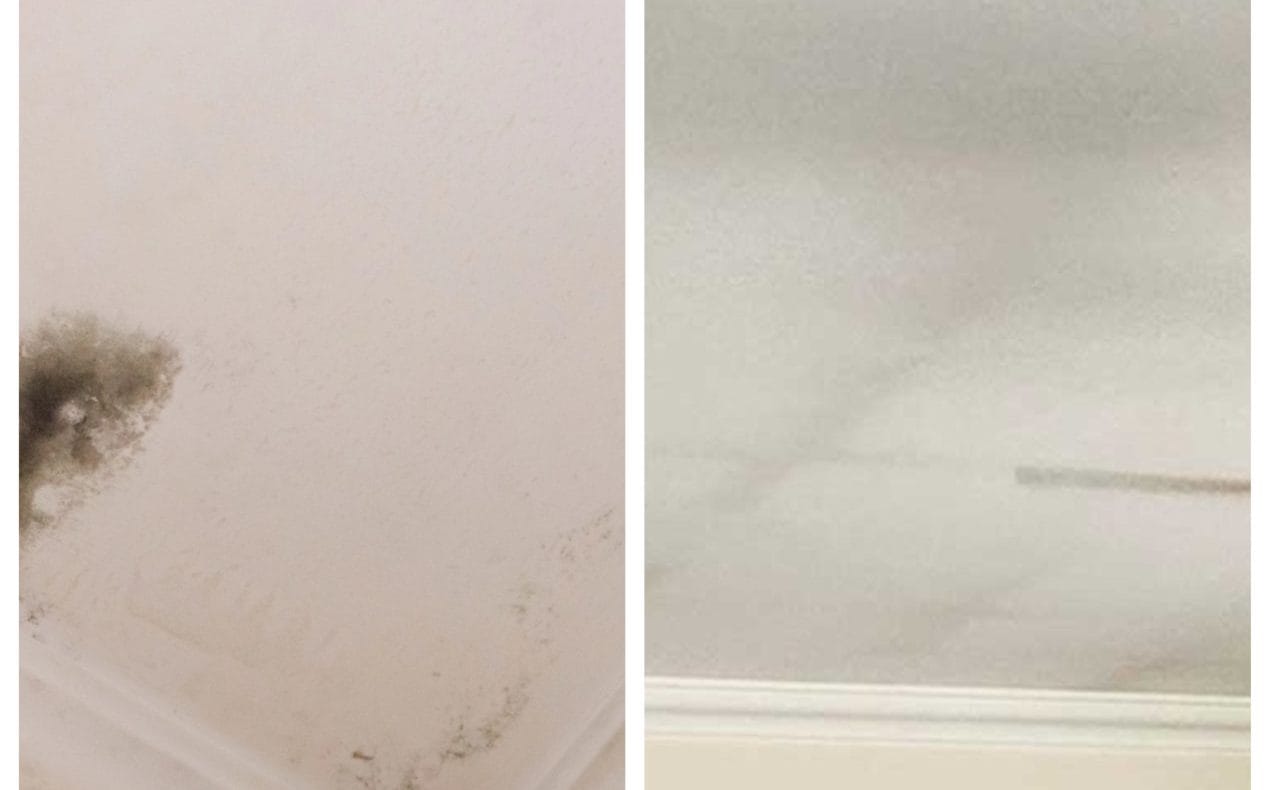
Have you ever glanced up at your ceiling only to be met with a chilling sight? Dark, smudge-y spots, almost like ghostly marks or (even scarier) mould? Before you jump to conclusions and start packing your bags for the nearest hotel, it’s important to understand what’s really causing this eerie phenomenon.
Is it mould or are you being ghosted?
Not all black spots on ceilings are a sign of mould infestation. In fact, many homeowners confuse mould with a phenomenon known as thermal “ghosting.” So, how can you tell the difference?
Mould typically appears in areas with high moisture levels, such as bathrooms or basements. It’s often accompanied by a musty odor and can cause health issues if left untreated.
Ghosting, on the other hand, occurs when dust and soot particles accumulate on the ceiling surface, usually in patterns that mimic framing members or insulation, due to thermal bridging (cold conduction through the wood, which causes these cooler areas to collect condensation that dust and soot stick to). While not as harmful as mould, ghosting can be unsightly and indicate underlying issues with insulation and air quality.
If you’re unsure whether you’re dealing with mould or ghosting, it’s always best to consult with professionals whose expertise in building science and environmental health can accurately diagnose the problem and recommend the best course of action.
Preventing ghosting with insulation strategies
If your home is creating ghosting, investing in an energy retrofit to improve your building envelope can prevent future occurrences and improve the health, comfort and efficiency of your home. Here’s how:
- Reduce thermal bridging: Ghosting often occurs due to temperature differentials between indoor and outdoor spaces, leading to condensation and the deposition of dust particles. By properly insulating your home and minimizing thermal bridging, you can maintain more consistent temperatures throughout, reducing the likelihood of ghosting.
- Enhance energy efficiency: An energy-efficient home isn’t just good for the environment — it’s also good for your wallet. By reducing heat loss through proper insulation, you can lower your energy bills and enjoy greater comfort year-round.
- Improve air quality: Insulation not only regulates temperature but also helps control indoor air quality. By sealing gaps and cracks in your home’s envelope, you can prevent pollutants and allergens from infiltrating your living space, creating a healthier environment for you and your family. Wood-burning fireplaces, cooking and burning candles can also contribute to ghosting and reduced air quality. Making your home airtight and ensuring proper filtration on your ventilation systems are important.
- Extend the lifespan of your home: Investing in insulation isn’t just a short-term fix — it’s a long-term investment in the durability and longevity of your home. By minimizing moisture infiltration and thermal stress, you can prevent costly damage and avoid the need for frequent repairs down the line.
Whether it’s thermal ghosting or mould, homeowners should have the issue diagnosed. Solutions for both are available, including from The Conscious Builder.