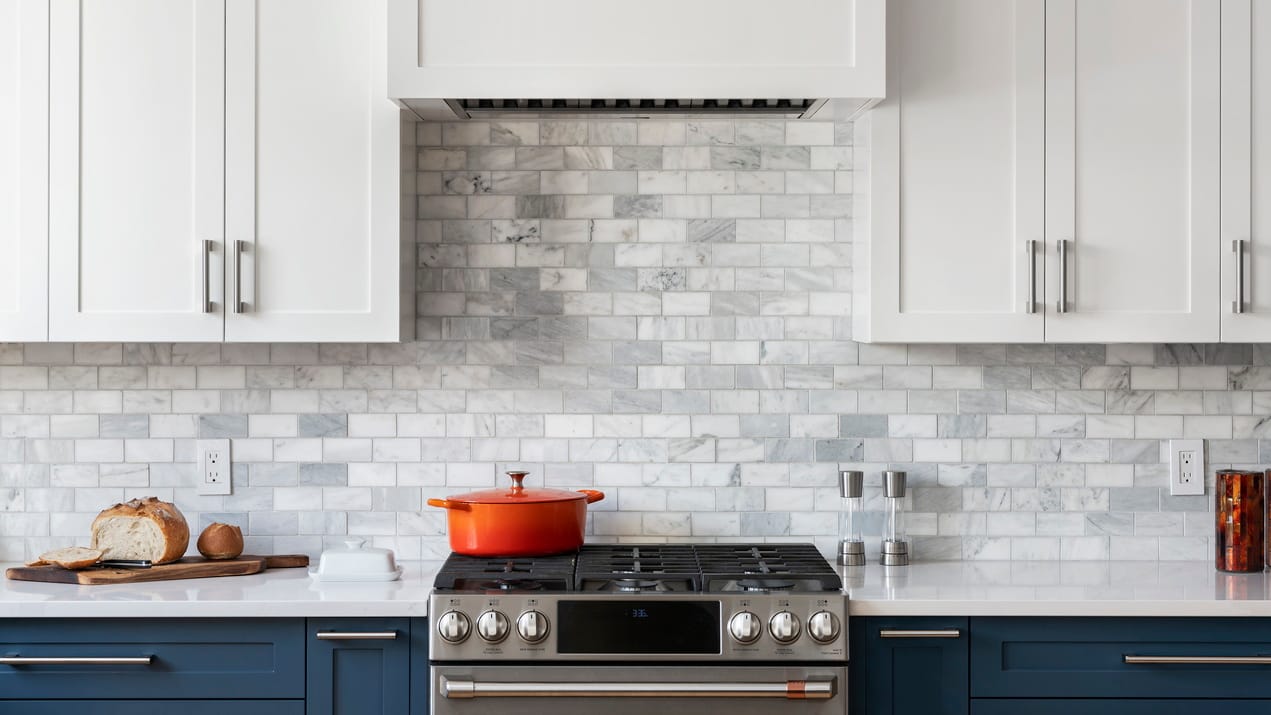
Choosing custom cabinetry for your next kitchen renovation is a critical design element that directly impacts the overall esthetic and functionality. Visually speaking, the cabinet door’s style and finish are the most noticeable parts of a cabinet. While the exterior look is critically important, the box and its construction should not be ignored.
Many manufacturers have moved toward frameless cabinet construction to maximize interior space and storage accessibility, enhance functionality and offer endless design versatility.
Before settling on your cabinet choice, it’s essential to familiarize yourself with the nuances between frameless and framed cabinets, as frameless kitchen cabinets come with a range of advantages that can impact your decision-making process.
Framed vs. frameless cabinets
When considering cabinet construction methods, cabinetry is divided into two major categories: standard “framed” cabinetry versus European-style “frameless” cabinetry. But what do these terms mean?
What is framed cabinetry?
Fundamentally, standard or “framed” cabinets feature a face frame that is attached to the front of the cabinet, providing structural support and acting as a decorative element.
Framed cabinets are often referred to as “American,” as this is a common construction method for cabinets manufactured in the USA — although this is changing as many cabinet companies are moving towards a frameless design.
What is frameless cabinetry?
In simple terms, frameless cabinets lack a face frame, resulting in a sleek, seamless appearance because the cabinet doors cover the entire front of the box. For this reason, these cabinets are sometimes referred to as “full overlay” cabinets.
You might also hear frameless cabinets referred to as “European” because the minimalist style originated in Europe and gained popularity there before spreading to other parts of the world.
Construction differences: Framed vs. frameless
Framed cabinet construction
Framed cabinets are constructed with gables (the vertical side panels of the cabinet box, which define the cabinet’s shape) integrated into the overall structure of the cabinet. The face is attached to the front of the frame and serves as the fixing point for the cabinet doors. A horizontal rail is often used as part of the cabinet’s face frame structure, and wider cabinets often include a central vertical stile between the two cabinet doors. Depending on the style chosen, door hinges may or may not be visible.
Framed cabinet doors can be inset, fitting precisely within the frame for a flush appearance, or overlay, where they partially cover the frame, creating a more prominent visual contrast.

Frameless cabinet construction
Frameless cabinets have no face frame applied to the cabinet box. In this style of manufacturing, the cabinet doors are hinged directly to the cabinet’s side. The gables (the vertical side panels of the cabinet box found in traditional framed cabinets) are not visible from the front in frameless cabinets. Edge banding is used to conceal the exposed front edges of the box, ensuring a polished look.
Fully adjustable specialized hinges are mounted to the side gables and concealed inside the case. Thus, the doors themselves cover the entire cabinet box, resulting in sleek lines and uninterrupted surfaces. These European-style hinges are favoured because they offer adjustment in many directions, making it easy to finetune the door’s alignment.
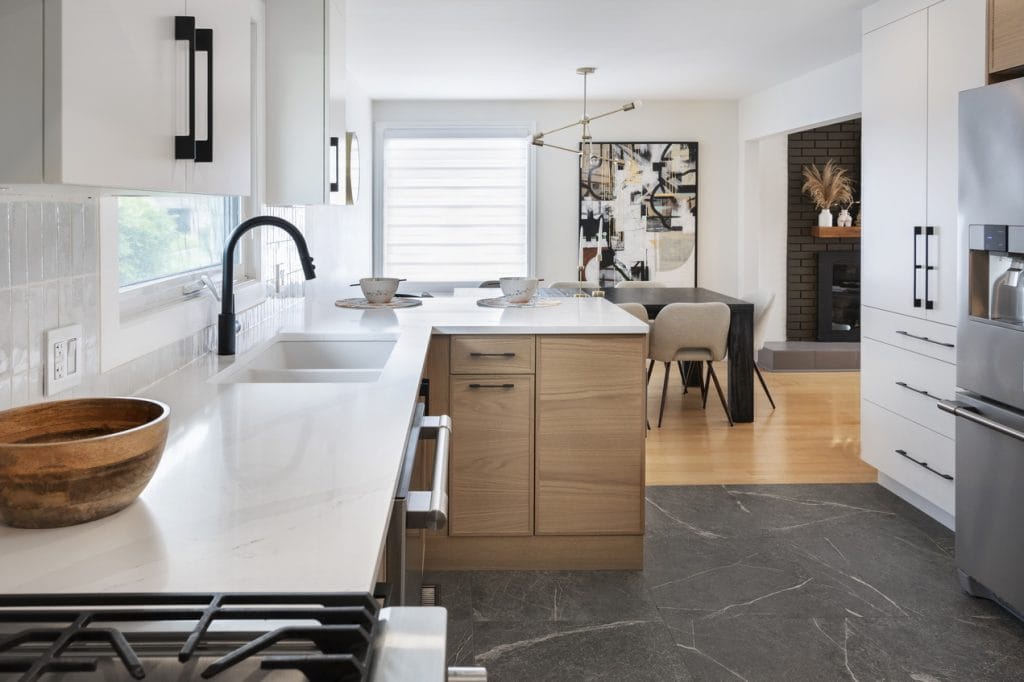
Growing popularity of frameless European-style cabinets
With the rise of modern and open-concept kitchen designs, homeowners and designers have embraced the sleek and efficient qualities of European-style cabinetry.
Adapting production for frameless cabinets
With a shift towards frameless design, manufacturing processes have evolved to accommodate the demands of European-style cabinets. Highly experienced craftspeople pay meticulous attention to the following aspects when producing frameless cabinetry:
- Construction: European-style cabinets require precise construction to ensure stability without the reliance on a face frame. This level of craftsmanship requires advanced joinery methods and uses high-quality materials to achieve a seamless look without sacrificing durability.
- Hardware integration: Special hinges and hardware allow frameless doors to overlay and open smoothly without the constraints of a face frame.
- Sizing accuracy: Unlike standard cabinets that may allow for some size variations due to the face frame, European-style cabinets require meticulous attention to sizing for a snug and uniform fit.
Advantages of frameless cabinetry
Frameless kitchen cabinets offer a range of benefits, making them an enticing option to consider for your kitchen renovation.
- Fully accessible storage: Often referred to as “full access” cabinets, frameless cabinetry provides unobstructed entry to the interior storage space.
- Increased storage space: Frameless European-style cabinets optimize space, offering larger interiors and thus ample room to store plates, platters and cookware. Additionally, frameless cabinetry allows for wider, more spacious drawer boxes compared to framed cabinets of the exact same width.
- Flexible styling: While offering a clean and uncluttered appearance, frameless cabinetry truly stands out for its remarkable versatility, seamlessly complementing a diverse array of styles, including traditional, modern and contemporary designs. This contrasts with the country-style esthetics often associated with framed cabinets.
- Enhanced organizational options: Frameless cabinets tend to be better suited for roll-out shelves and other kitchen accessories because they seamlessly integrate into them. Without the centre stile commonly found in framed cabinets, you have complete access to interior storage space, simplifying the installation of kitchen organizers. Additionally, frameless cabinets feature fully adjustable interior hardware, which offers flexibility in positioning and customization.
- Applied panels not necessary: With frameless cabinets, applied panels are unnecessary as the doors fully cover the gables. This creates a sleeker and more cohesive look, contrasting with traditional cabinetry that typically requires applied panels for coverage.
6 frameless kitchen cabinet ideas
1. Choose from versatile design options
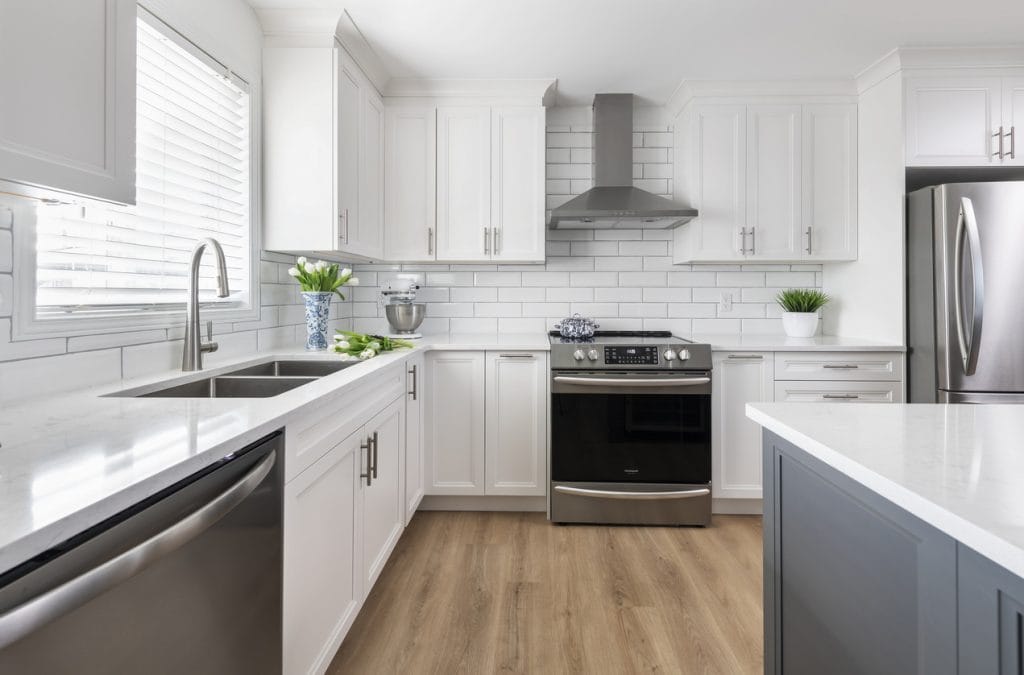
Frameless cabinets are offered in various door styles, materials and finishes, making them versatile enough to complement a range of top kitchen design preferences, including classic, traditional, modern and contemporary.
2. Enjoy enhanced accessibility
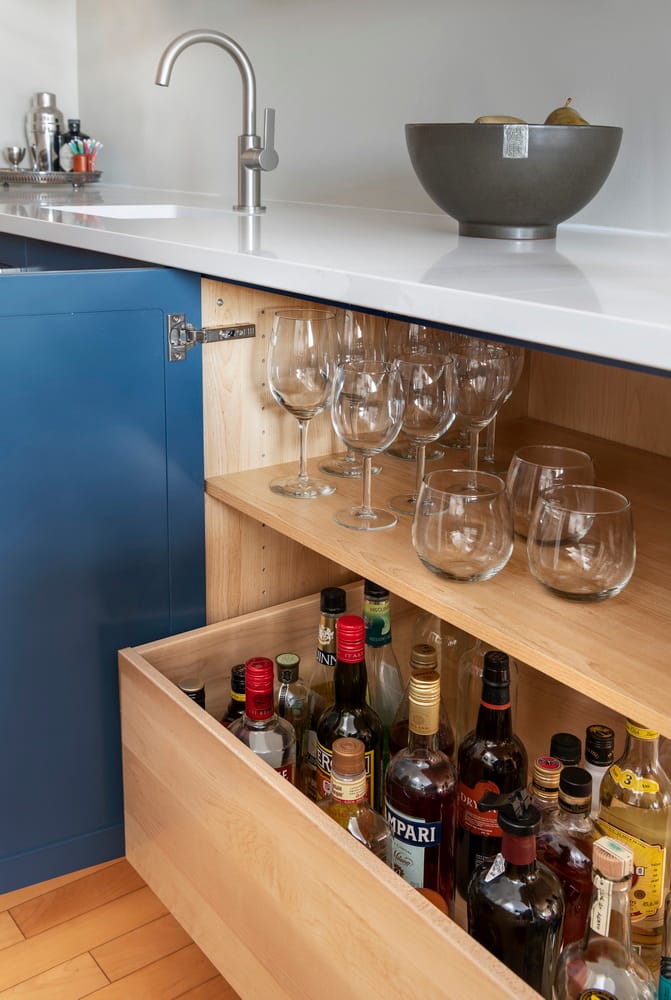
With frameless cabinets, the absence of a central stile allows for full utilization of interior space and easy accessibility to stored items. Their design is ideal for pull-out shelves and interior organizers.
3. Utilize space efficiently
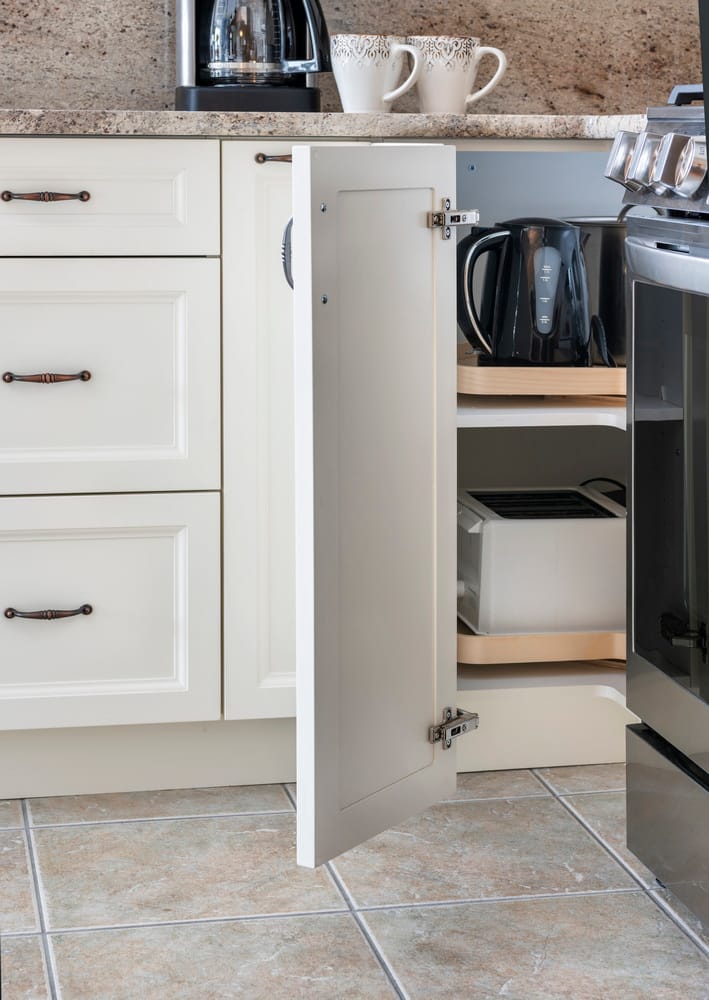
Frameless cabinets maximize interior space, making them ideal for compact kitchens where effective storage is vital, as exemplified by this corner cabinet with a rotating organizer.
4. Achieve sleek and modern esthetics
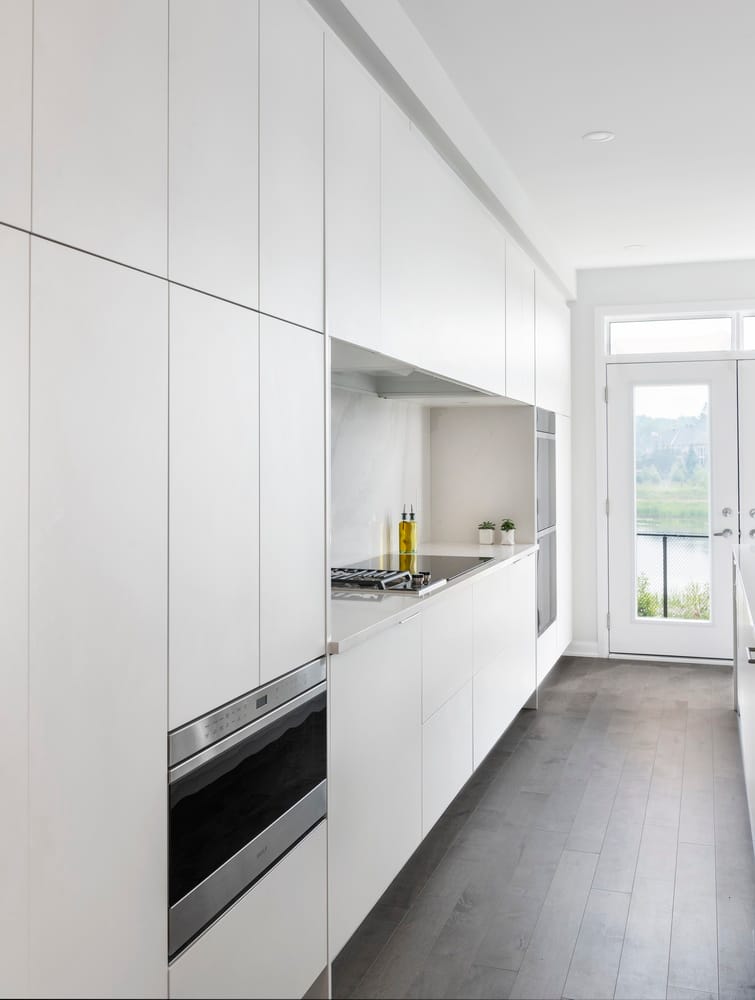
Frameless cabinets with sleek, handleless doors exude contemporary sophistication.
5. Customize and organize cabinet interiors
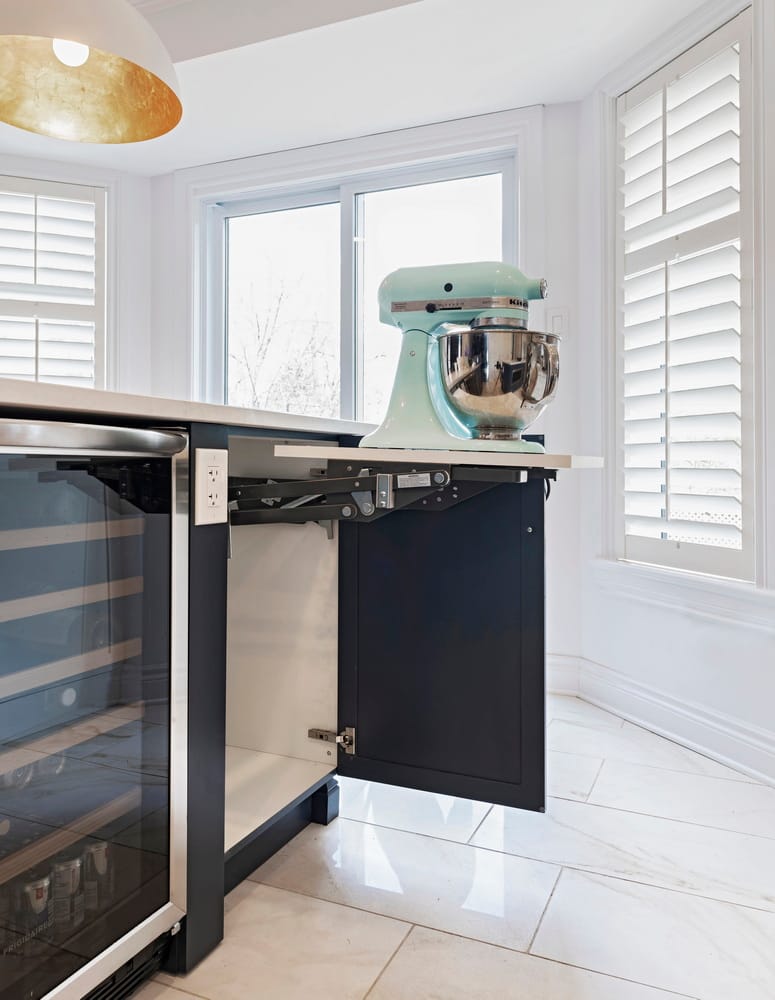
Frameless cabinets offer flexibility in interior organization, allowing homeowners to customize storage solutions according to their specific needs and preferences.
6. Seamlessly integrate modern appliances

Frameless cabinets can seamlessly integrate with modern appliances, creating a unified, cohesive look in the kitchen while maximizing available space and functionality.
Elevate your space with frameless cabinets
Your kitchen cabinetry should be beautiful, functional and built to last.
Established cabinetry manufacturers offer a range of readily available lines to suit various preferences and budgets, or you can create a fully customized solution tailored to your unique needs and tastes.
Work with an experienced cabinetry designer at a manufacturer to ensure your cabinetry is tailored to your space, with the right fit, function and finish.
