Uncertainty, precarity, disappointment and, somewhere in those grey skies, the occasional glimmer of hope that things will, inevitably, improve. That was the main takeaway from Hello 2026/Goodbye 2025, the annual Ottawa housing market outlook organized by the Greater Ottawa Home Builders’ Association (GOHBA).
Cheryl Rice, president of real estate consultancy PMA Brethour Real Estate Group – Ottawa kicked things off with her presentation to a sold-out audience of local housing industry representatives and allied businesses.

Noting the uncertainty fueled by the trade war instigated by U.S. President Donald Trump, Rice first addressed the resale market, which she described as the “backbone of the housing market” that drives pricing, supply and buyer psychology. Despite the confusion caused by Trump’s on-again, off-again tariffs and other manoeuvres, she said Ottawa’s resale market witnessed a steady year in 2025, with sales up one per cent over 2024. The year ended in a balanced position favouring buyers and sellers about equally and with a solid inventory of homes for sale.
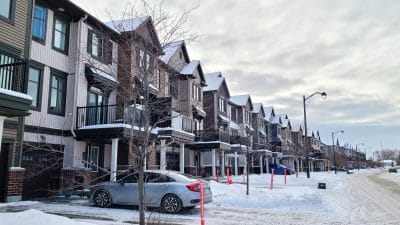
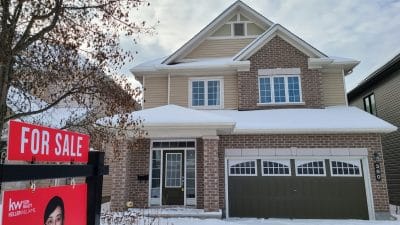
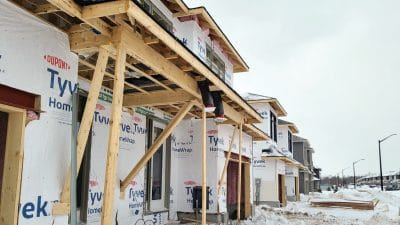
The new-home market, by contrast, ended 2025 on a somber note, a contrast with the recovery in 2024 that had followed a sharp, post-pandemic downturn in sales. While sales numbers in 2025 were encouraging through the first part of the year, Rice said bad weather, employment concerns and other factors slowed sales in the final quarter and the year “ended in pause.” In total, 3,426 new-build homes were sold last year, down from 3,708 in 2024 and 23 per cent below the 10-year average of 4,472 sales.

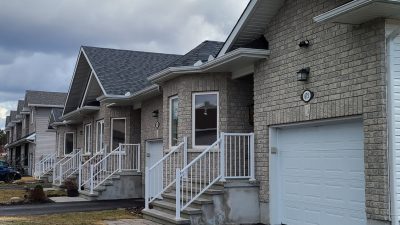
The decline occurred despite a gradual softening of prices for both singles and townhomes and the growth of less expensive three-storey townhomes.
“Improving affordability was offset by elevated economic and political uncertainty,” said Rice. “Looking back on 2025, what many hoped would be a turnaround miracle in Ottawa’s new-home market was a disappointment. Not because the fundamentals weren’t there, but because consumer confidence wasn’t.”
MORE: Hello 2025 and Goodbye 2024
Casting ahead to this year, Rice said federal job impacts are expected to have a modest impact on the city’s housing market, which will be supported by other factors like population growth, immigration and a strong inventory of new-build homes.
She also noted that “experts and policymakers seem to have aligned on a multi-pronged strategy that shifts from just building more to building the right things faster.” That includes zoning reforms to allow greater density in urban areas, tax rebates to enable first-time homebuyers to enter the market more easily and other initiatives.
Add other pluses such as an apparently stable interest rate and the country’s now-proven ability to absorb shocks and adapt to challenging economic and political forces, and Rice is cautiously optimistic about the new-home market this year. She is forecasting 3,500 sales in 2026, possibly increasing to 3,800 if the number of new releases accelerates.
In a subsequent Q&A, she added that both 2026 and 2027 will be “recovery years” after the precipitous sales decline of the post-pandemic years.

Instability and uncertainty: the new normal
Prefacing his presentation by saying he would delve into the “psychological consumer mindset,” David Coletto, chair and CEO of public opinion research agency Abacus Data, reminded his audience that, at last year’s Hello and Goodbye session, he had spoken about the “scarcity mindset” that had beset Canadians post-pandemic. By that he meant the fear that things Canadians needed were going to become more expensive, harder to get and easier to lose.
That perception of scarcity has now been replaced, he said, by a “precarity mindset,” a belief among many Canadians that the world has become an unpredictable one where major decisions are frequently delayed.
In examining precarity, Coletto pointed to a recent Abacus poll that saw 79 per cent of Canadian respondents saying Donald Trump, who has enacted dangerous tariffs, blathered about Canada becoming the 51st state and cast the country as a freeloader, is creating stress about the future of our nation. The same poll found 70 per cent of respondents are “delaying major life decisions due to the financial uncertainty that this world is creating.”
Focusing on Ottawa, Coletto pointed to other fear factors, including ongoing cuts to the federal civil service under the Carney government. He said a concern that AI could displace “knowledge workers” like many of those employed by the federal civil service, whether it’s true or not, sparks particular worry in Ottawa.
All this adds up to wariness about buying a home.

And while his polling found 86 per cent of respondents under 30 still want to buy a home, the majority say they can’t, not just because of affordability but also because there’s a lack of homes that meet their needs. A 500-square-foot condo doesn’t cut it when you want to start a family, he noted, adding: “The fertility rate (among) Canadians is collapsing, I think in large part because of the insufficiency of our housing.”
Coletto’s wide-ranging and insightful presentation included a reference to a recent survey he conducted with the Ottawa Real Estate Board. One in five respondents said housing affordability was their No. 1 concern, and more than 80 per cent said housing issues would matter in how they vote in this fall’s municipal election.
When it comes to selling homes in a precarious marketplace, “one of the things I think is most important to understand about consumers in this moment is they feel they have no control,” he said. He advised homebuilders to “let them know you understand where they’re coming from and that at every stage of the process you are going to reduce risk. You are going make things more certain.”
He reminded his listeners that if instability and uncertainty are the “new normal,” we’ve also been through this before. “Remember the 1960s. A U.S. president was actually assassinated. Martin Luther King (Jr.) was assassinated. There was a war going on in Vietnam. There was upheaval everywhere, there was social and economic change, and so we’ve been through moments like this. And we’ve survived and we’ve thrived and we’re doing better.”

The rental market in 2026
Real estate economist Francis Cortellino from Canada Mortgage and Housing Corporation drew his audience’s attention to the startling changes in Ottawa’s purpose-built rental market over the past 15 years. Between 2010 and 2017, roughly 400 new units were built each year. That climbed to 3,300 by 2023. As of December 2025, there were 11,000 units under construction.
At the same time, the number of new immigrants coming into Canada — people who typically start off as renters — has slowed, as has the number of international students. There are people moving to Ottawa from other parts of the province, in part because housing is less expensive here than, say, in the Greater Toronto Area, but that’s not offsetting the drop in immigration and foreign students.
Complicating matters, Cortellino pointed to “a job market that is quite difficult for young people at the moment, so you’re not really in the spirit or the mindset to find an apartment. You’re probably going to stay in the basement of your parents’ home.”
To attract and retain tenants, landlords are offering move-in incentives and holding rent increases to a minimum.
It adds up to a weaker rental market going forward, according to Cortellino.
“We’ve got a lot of supply coming to the market. Rental demand is weaker. We expect the vacancy rate to continue to increase in 2026 in Ottawa.”
The last word
GOHBA’s executive director, Jason Burggraaf, leavened the gloomier elements of Hello 2026/ Goodbye 2025 by wrapping up the morning session with a bit of uplift.
“I feel very compelled to try to put a silver lining or something positive on today, so it’s this: the longer-term outlook.
“Next week, the city is going to look at updated growth projections for the City of Ottawa. It’s going to update from a growth of 400,000 people to 2046 to 680,000 to 2051.
“What that translates into is where our original (Official Plan) was based off building 195,000 new homes over 25 years, that number is going to go up to 250,000 homes by 2046 and then another 50,000 on top of it for 2051.
“So, maybe this year, next year, it might be slow, middling, whatever words you want to use. You guys have been in the business a long time. Hopefully when we get to Hello 2046, we’ll been talking about a number of years of very good activity.
“Don’t get discouraged from today. There’s going to be a lot of growth, especially interprovincial migration. If the other areas of the province don’t do as well providing housing, people are coming here, and they already are, so we need to step up and do that over the long term.”