I graduate from university soon, which means I’ve started asking the big questions: Where will I work? Where will I live? And, increasingly, will I ever be able to afford a home?
Scroll through Ottawa listings and it’s hard not to feel discouraged. Detached homes regularly list for $700,000 or more. Even townhomes often push past $600,000. For someone about to enter the workforce with student debt and an entry-level salary, those numbers feel less like goals and more like a different universe.
So, I decided to do the math.
If I graduate with roughly $25,000 to $35,000 in student loans and land a job paying $55,000 a year, a realistic starting salary in many fields, my monthly take-home income will hover around $3,400 after taxes. Rent for a one-bedroom apartment in Ottawa can easily exceed $1,800. Add loan payments, groceries, transit and basic expenses, and the room left to save shrinks quickly.
A five per cent down payment on a $400,000 home at the lower end of what many builders market as “entry-level” is $20,000. Saving that while paying rent could take years.
For some students, even the idea of eventual ownership feels unrealistic.
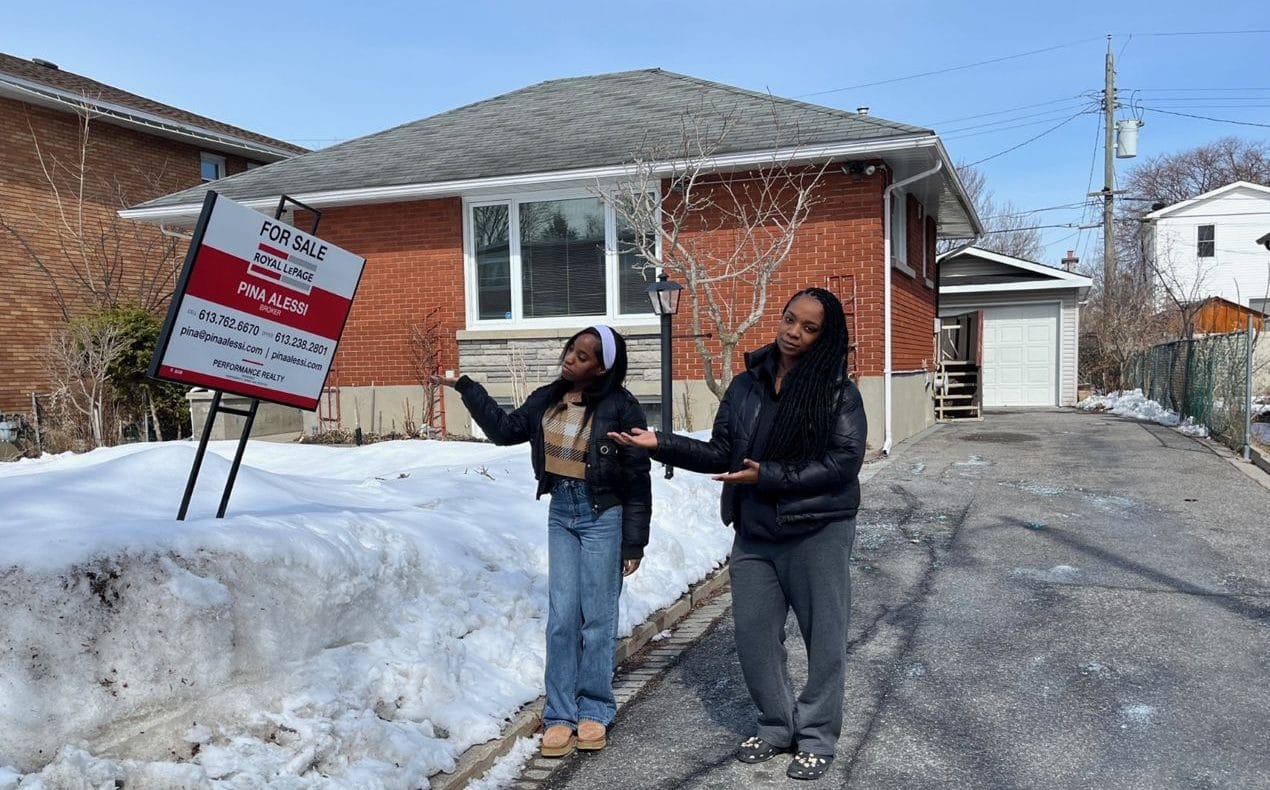
“I’m going to be so honest and say no,” says Melissa Melbourne, a final-year Criminology student at Carleton University, when asked if she realistically sees herself owning a home one day. “In the housing market that we’re currently in, it’s almost … impossible for young adults to buy houses.”
Melbourne, who is 21 years old and originally from the Greater Toronto Area but now lives in Ottawa, says the housing crisis feels tied to broader economic instability.
“More specifically, the housing crisis and the job crisis. It’s making it very difficult for young adults to set up a future that enables them to (buy),” she says.
Although Ottawa is often considered more affordable than Toronto, that hasn’t made things any easier.
“I would say right now Ottawa is probably one of the cheaper places in Ontario to live in, but it makes it so difficult because it’s hard to find jobs over here,” she says, adding that she has struggled to secure stable employment and adequate housing. “The idea of buying something in Ottawa is kind of far-fetched for a lot of young adults and middle-aged people right now.”
Her frustration also extends to what she sees as a development disconnect.
“There’s so much development in so many of these major cities in Ontario,” she says. “You’re building these homes and then no one’s buying them, and you’re building these condos and no one can afford to rent them out.”
Housing affordability challenges in Canada reflect long-term structural issues, including rising rents and a shortage of affordable housing, with many new units priced far beyond what average renters can afford.
Similarly, Carolyn Whitzman, a housing researcher at the University of Toronto’s School of Cities, argues in her recent book Home Truths: Fixing Canada’s Housing Crisis that Canada’s housing system increasingly treats homes as investment assets rather than simply places to live, a shift that pushes prices beyond what many young workers can support on on income alone.
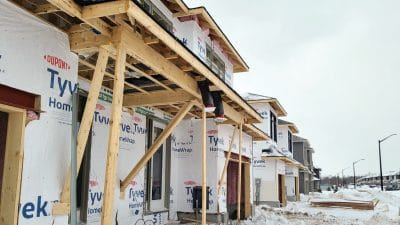
There are options marketed toward first-time buyers. Local builders including Caivan, Urbandale Construction and Minto have developments priced under $400,000. These are often stacked townhomes or condos on the city’s outskirts. They lower the sticker price but condo fees, commuting costs and mortgage qualification requirements still apply.
For Melbourne, even so-called starter options feel complicated. “I feel like a fixer-upper is the best that the vast majority of us young adults are going to be able to get,” she says.
But she worries about what that would require. Remodelling a home demands “a lot of time, a lot of energy and also a lot of renovations, which are also costly,” she says. “You’re kind of having to pick your poison.”
Beyond finances, there’s also emotional pressure. “I think throughout society there’s a lot of people right now who are investing, who are making money by different means,” she says. “Social media also plays a factor in that feeling of falling behind.”
If she had to put an age on it, she says she would expect to own by 30, though she admits that timeline feels tight. “There is that feeling of, ‘I’m falling behind because I don’t own a home but everyone else has one.’”
When asked how she feels about the housing market overall, her answer is blunt. “I feel very stressed and a bit indifferent.” While she has the option of living with her parents, returning home carries its own pressures in a culture that values independence. “The housing market isn’t really set up for us to win.”
Her perspective reflects something I’ve heard repeatedly: ownership no longer feels like an automatic milestone of adulthood. It feels conditional on salary growth, on market shifts, on policy changes, and often on family support.
Buying a home in Ottawa may not be impossible. But for many students preparing to graduate, it no longer feels inevitable. It feels uncertain, and uncertainty may define our generation’s relationship with housing more than anything else.