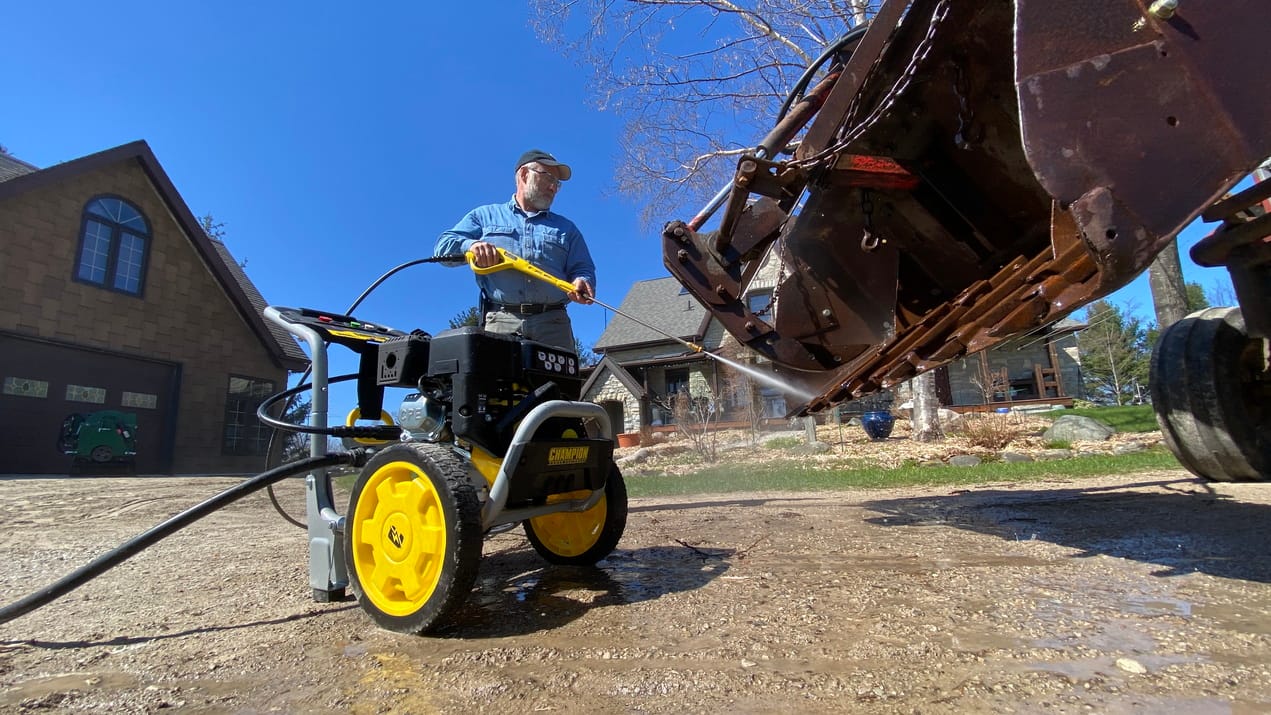
A pressure washer is one of those tools that can make outdoor cleaning efficient, if not almost pleasant. Dirt on decks, siding, lawn furniture, trailers, vehicles and concrete all get clean quickly with a pressure washer. I use mine every year.
But pressure washers are also surprisingly easy to damage, especially at the start and end of the season. A few minutes of care can prevent trouble.
Start with engine oil
Gas-powered pressure washers need more attention than electric, and the first thing to tackle is engine oil. If you didn’t change it in the fall, do it now. Most small engines have a drain plug near the base.
Mine is on the side of the engine, so I made a little sheet metal trough to direct waste oil into the drain pan. A rare earth magnet on the steel base under the engine keeps the trough in place.
I’ve never seen any outdoor power equipment that didn’t take 10W30 motor oil but check your manual.
Never run the pump dry
Before starting any pressure washer, gas or electric, connect the garden hose and turn the water on fully. Pumps depend on water for cooling and lubrication, and even a short dry run can do damage.
Squeeze the trigger on the spray wand with the engine or motor off until water flows freely. This purges air from the system and confirms that water is actually getting through.
Flush before you start
Here’s a trick that can save you a big headache: remove the spray nozzle for the first flushing of the season. Let water run through the hose and wand without a nozzle installed before you start the engine or motor.
Tiny particles of grit, rust or sediment can come from the hose, the pump or the fittings after winter storage. If these particles lodge in the nozzle, it can become difficult to remove the tip for cleaning if back pressure has built up behind sediment. It’s happened to me.
Use the right nozzle
Once the system is flushed, install the nozzle you want but choose carefully. The narrower the spray pattern the more concentrated the pressure. Narrow nozzles can cut wood fibres, strip paint, force water behind siding and damage soft materials.
For decks, start with your widest tip and keep the wand moving at least 16 inches (40 centimetres) from the surface until you see how aggressive the pattern is. Pressure washers can make old wood look better, but they can also raise grain badly enough that sanding becomes necessary.
Handle soap properly
Soap dispensers are useful, but they work differently than you might think. Most consumer pressure washers draw detergent only when the low-pressure soap nozzle is installed.
If the soap isn’t being drawn from the tank, check the nozzle first. Use only detergents meant for pressure washers, not thick household cleaners. After using soap, run clean water through the dispenser system to prevent residue from drying inside the lines.
Think ahead to freezing weather
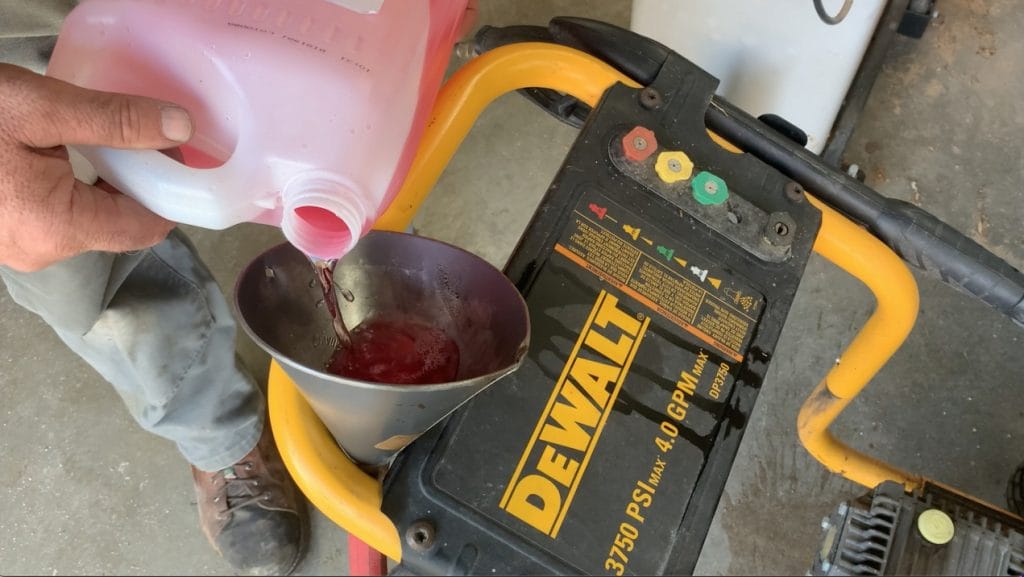
Photo: Robert Maxwell
The most important pressure-washer maintenance happens at the end of the season, especially in Canada. Water left in the pump will freeze, expand and crack internal parts.
Disconnect the hose and spray line, fit a short rubber hose and funnel over the pump intake and pour plumbing antifreeze into the funnel. Keep the engine switched off, and pull the starter cord repeatedly. You’re not trying to start the engine, only turn the pump. Keep pulling until you see antifreeze coming out the outlet. This displaces water and protects the pump from freezing.
A pressure washer is a powerful tool, but it’s certainly not plug-and-play. Flush it before use, feed it clean water, treat nozzles with respect, rinse the soap system, and protect the pump from freezing.
Do these things and your washer should wake up each spring ready to work instead of ready to cost you money.