The housing industry has traditionally been known as a male-dominated field, but that’s changing. More and more today, it’s women in the decision-making roles, as evidenced by three recent high-level appointments.
Late last year, Michelle Taggart, whose family has been in construction and land development since the 1940s, took over as co-president of Tamarack Homes and Tartan Homes. Two months later, Tanya Buckley, who had long been with Cardel Homes, was named senior vice-president of Urbandale Construction. And this spring, Alyssa Stack, who had been general manager at Patten Homes, was named senior vice-president and general manager at Cardel.
They certainly aren’t the first women in leadership roles in the industry. Caroline Castrucci, for instance, has been running Laurysen Kitchens with her brother for several years and is a past president of the local housing association, the Greater Ottawa Home Builders’ Association (GOHBA). And Carolyn Munro started her own business, Carolyn Munro Design + Build, designing and building custom homes and renovations, in 1986, leading the way for women in the field.
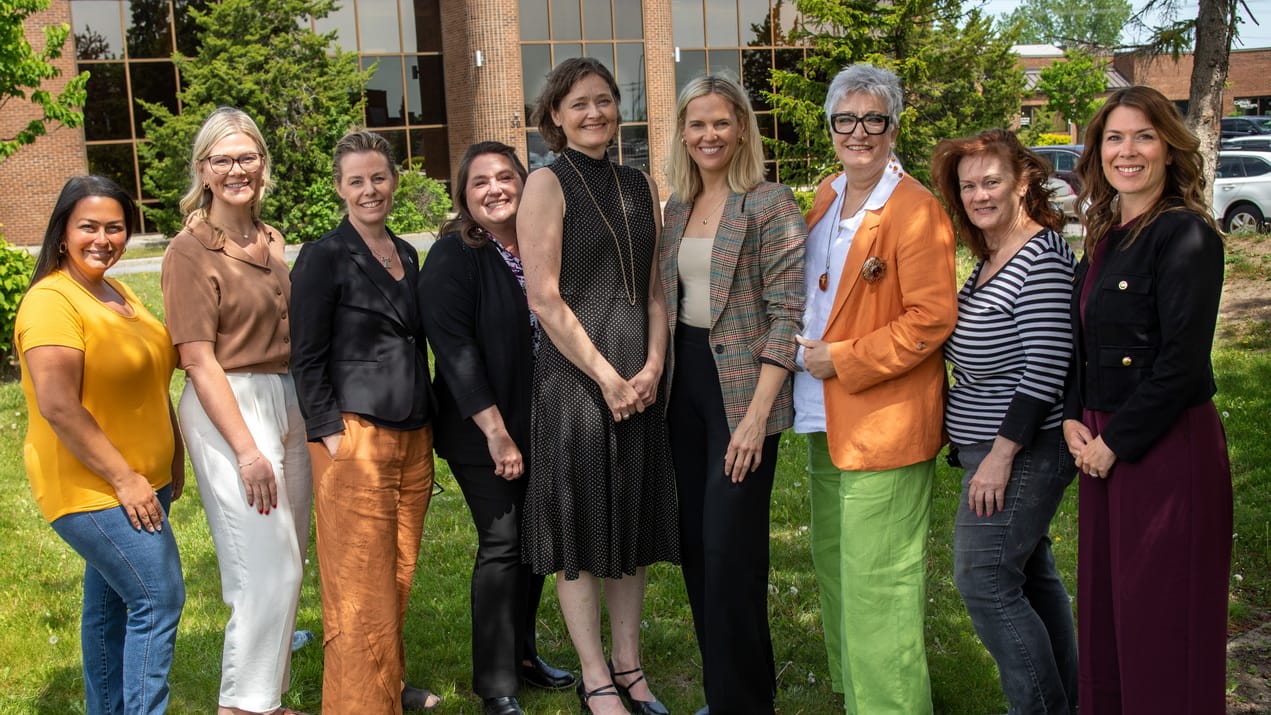
But the recent appointments seemed a natural time to explore how the industry has changed for women and what they bring to the table. In June, nine of them gathered in a conference room to examine the challenges and opportunities facing women in the housing sector.
Watch a video summary of the discussion:
(a synopsis from each participant can be found below the video)
MORE: Read the full discussion transcript
◊◊◊◊◊
 Linda Oliveri Blanchard didn’t set out to be a trailblazer. Initially, she wanted to be a French teacher. But she needed a part-time job while in university and Enbridge Gas had a retail outlet next door.
“I lived in a high-rise condo. I didn’t even know what Enbridge Gas was,” she says. But her exposure to the company got her interested in becoming a gas fitter so, when she finished university, she enrolled in trade school.
“I was the first woman to physically walk in the doors, never mind take a course, and (there) was this intense fear of failure. Not only did I finish, but I finished at the top of the class, because of that fear. I didn’t want to be the trailblazer woman who walks in and then fails.”
One of the first women in Ontario to become a licensed gas fitter, she leveraged her skills into learning everything she could about the business and today is the senior regional manager of Eastern Ontario for Enercare Home Services.
For a long time, she had to fight misperceptions when competing for client business. “It was me and there were two guys who did the same job as me for other companies. And I’d walk into a room and just to be perceived at the same level as them, I had to earn my way up and I had fight for it.
“Meanwhile, at the same time, I’m a gas fitter and they’re not; I’m actually qualified and they are not. But I had to earn it, because of the assumptions.”
The industry has matured, she says.
“In the last 10 years, the pace (of change) is really starting to pick up. You go out on sites, you see women site supers, foremen, trades and even on this side as a trade supplier, we’re actually respected enough to be given a chance to place a bid on a project, whereas before it was the old boys’ club. Could it still improve? Absolutely.”
◊◊◊◊◊

 Rosaline Hill has battled assumptions as well. She started her own architecture firm, RJH Architecture + Planning, because her personal life “was too complicated to go back to a conventional office. And I made very specific choices about how I was going to balance my personal life and my business,” working 35-40 hours a week when her children were young, versus male counterparts working 60-70 hours. “My success matched theirs.”
It’s important, she says, for women to know that “they don’t just have to choose between nine to five and bring your phone home and answer emails, that you can carve out other options for yourself in the workplace.”
Because she’s a residential architect, she runs into the assumption that she must do additions and custom homes. “I work exclusively for developers. People don’t assume that a woman architect works exclusively for a developer. And I do have clients who will tell me still, ‘Well, we give our big jobs to other architects.’”
There are also boardroom assumptions, she says. “I regularly have to demonstrate that I can understand a business model, that I can understand a business pro forma, that I know how my clients are going to be getting their financing and the conditions that they will face when they need to reach their financing. And that’s not something that people would assume about me. Whereas if I was a man, they would be more likely to assume that I had that skill set. And so, in instances like that we just have to calmly keep proving ourselves in spite of the assumptions.”
But she’s also had positive experiences, including feeling welcomed and respected when she was the only woman — an “intensely intimidating” experience, she says — on the housing association’s Urban Infill Council, which works with the city and community groups on municipal planning issues that affect residential development inside the Greenbelt.
In an example of how things have changed, she shares an anecdote about her girls.
“My daughters found my construction boots in the cupboard about six or seven years ago and my little girl said, ‘Ew, whose are these? Are these yours?’ And last year one of my daughters started in architecture at Toronto Metropolitan University and I bought her her first pair of construction boots.”

◊◊◊◊◊
 Tanya Buckley is in line to be the housing association’s next president, only the fourth woman to do so in its 75-year history. After many years at Cardel Homes, she was appointed senior vice-president of Urbandale Construction in January.
She sees potential for the future of women in the industry and the overall value that having such diversity in the mix brings.
“It’s not about women being better than men, or men being better than women, it’s that different perspective, and different way of working, too,” she says. “We can empathize with our buyer in a way that men typically couldn’t in the past. And maybe I’m wrong there, but I do think that we bring a different relationship to our buyers than men do.”
The industry is at a point where the opinions of women are now being sought, “as opposed to, you’re in the room and you participate, but you’re not necessarily being drawn in.”
A great example of change, she says, is an initiative of the housing association that began in 2023, called HOWL (Home Builders of Ottawa Women Leaders).
“This association recognized something that was there, but hadn’t been highlighted and nurtured, and it was that there is a strong presence of women in this industry, and it should be recognized, nurtured, celebrated and that initiative has really brought us all out of the woodwork. You look around the room at any HOWL event, and it strikes you as to how much change has happened.”
What else could change? “It’s time to take a leadership role,” she says. “I think we’ve worked really hard to get here and I wish I had someone like the people in this room to work with and learn from.
“I was fortunate to have men recognize my potential and give me opportunity and teach me. But, in hindsight, I wish I had had a woman as an example or coach or mentor. And I think that’s where we can maybe step up a little more, and it’s not just lead by example, but actually seek out, nurture young women in this industry who want to build a career.”
◊◊◊◊◊
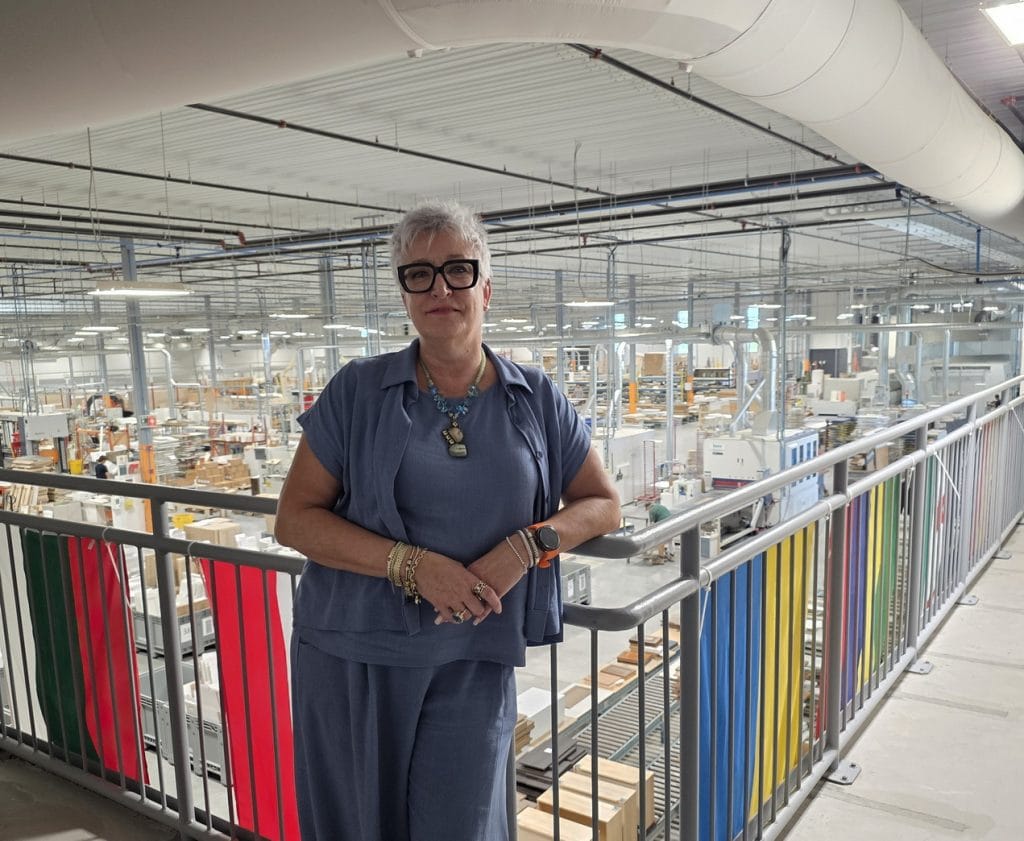
 Caroline Castrucci, whose father launched Laurysen Kitchens in 1970, literally grew up in the business, which was run out of the family home in the early years. She didn’t plan to make a career of working there, but 40-plus years after starting a temporary summer stint before heading off to college, she has worked in nearly every aspect of the company, including building and delivering kitchens, and today is its CEO.
When she started, she says, there were just two women out of 200 attendees at the monthly housing association meetings: herself and designer Linda Nolan. Today, it’s closer to 50 per cent. Interestingly, Linda would go on to become the association’s first woman to be president; Caroline was the second.
The day before the roundtable discussion, Caroline was encouraged to see five women on a commercial high-rise project with boots on. “They were schlepping stuff, painting and doing stuff and it was nice to see. And I don’t remember the last time that I actually saw five women working in — residential, yes, when it’s a single-family home — but not in a commercial high-rise.”
There are still assumptions to overcome, she notes. “I don’t want to buy new construction boots because mine are very used. They’re well lived in and I don’t want new ones because then (the impression is) I’ve never been to a job site before.”
Change could always go faster, she acknowledges, “but it has to be more organic and it has to develop. You can’t just change for the sake of change; it has to be change for the good. And I think for it to be disseminated into all things, it has to go slowly… You’re not going to flip a switch and it’s going to be changed overnight.”
◊◊◊◊◊

 Michelle Taggart has a long family history in construction. Her grandfather Harold Taggart began building homes in the early 1940s and today the Taggart Group of Companies has five major businesses in real estate management and land development and hundreds of employees. Michelle, who has a background in urban planning and led Tamarack Homes’ land development division for several years, took over as co-president in late 2025.
“When I first started, I would often be the only woman at a table,” she says. “And now it happens regularly where it’s all women. And we have engineers, architects, designers all in leadership roles… I love attending a meeting and there’s a bunch of strong women around the table.”
Often, she’ll bring her three daughters to events she is taking part in. “I want them to see me in this leadership role and to know that they can aspire to leadership roles.”
Back in the day, she says, there was more of an old boys’ club mentality in the industry. “There would be fishing trips and there would be golf trips and sometimes … they would come back and decisions had been made. And I think having women at the table actually brings more, I don’t want to say professionalism, but just that layer of transparency maybe, where the decisions are now being made at the table and they’re being made in a bit more of a transparent way.”
Today, her most valuable asset is her time, which means she’s very thoughtful about what she does with her time, “what I say yes to, what I say no to, and also I outsource what I can… I have three questions I ask myself: is it good for my family; is it good for my emotional, physical health; is it good for my business? And I use those lenses to frame how I decide what I’m going to do with my time.”
◊◊◊◊◊
 Alyssa Stack spent almost two decades with a custom home builder in Arnprior, rising to general manager before shifting to production home builder Patten Homes and serving as general manager there for five years. She moved to the senior vice-president and general manager role at Cardel in April.
It’s not just women advocating for themselves that’s important, she says. “There has to be the equal amount of men in the industry who are willing to help those women step up or step aside to make room for women — to understand that women are more than just the administrators, the supportive roles — that these women can play at the big table.”
It’s also important to remember that while leadership opportunities are now open to women, “there still is a lot of work to do for those younger women coming into construction sites. So, to normalize having a woman at that level in the trades, in the field… We can also mentor our men on our teams in the field,” for example, letting them know that calendars on the job site that objectify women are not appropriate.
She finds there is still a double standard when talking about something technical. “It’s automatically assumed that the men at the table have the relevant experience. It’s not assumed the women do… I found as a woman starting in my young to mid-20s on the construction site, you have to work so much harder to show that you know what you’re talking about.”
When it comes to assumptions and not being treated with respect, she says she “had to get pissed off. I had a vice-president who would continually take my ideas to the big table and take the credit for them… It had to happen a few times before I finally felt ‘enough is enough and I’m willing to, not necessarily step on toes, but to make sure that upper management knew what was going on and that I do have my own ideas.’”
Her advice to others, whether men or women and in any industry: “Know your value, know your worth, and don’t be so eager to compromise just to fit in, but have that confidence to speak your mind.”

◊◊◊◊◊
 Carolyn Munro started in commercial construction in 1983 “and I wasn’t treated very seriously,” she says. “Mind you, I was very young; and they always tried to pull the wool over my eyes. I was always very polite when I caught them.”
The old boys’ club certainly existed — “I had nails (put) behind my tires one time at a job site” — but she found that overall, there was a balance: some of the men she worked with presented her with opportunities, too.
She originally wanted to become an architect but was discouraged by her father, who thought it would be a waste of time since she’d likely just get married and stay home to raise a family. As a compromise, she took the architectural technician program at Algonquin College, followed by its interior design program.
She launched the design side of her business in 1986, followed by the construction side in 1991, focusing on residential projects.
As much as clients are interviewing her for a project, she is also interviewing them (as well as potential trades) to ensure they won’t have an issue with a woman being in charge. “One (client) actually turned me down. So, I figured, ‘OK, well that saved me a breath.’”
While there were few women in the field when she began her career, she says she was fortunate to have a few men who would support her. “One said to me, ‘This is a stepping stone to your career, how can I help you?’ That was the best.”
◊◊◊◊◊
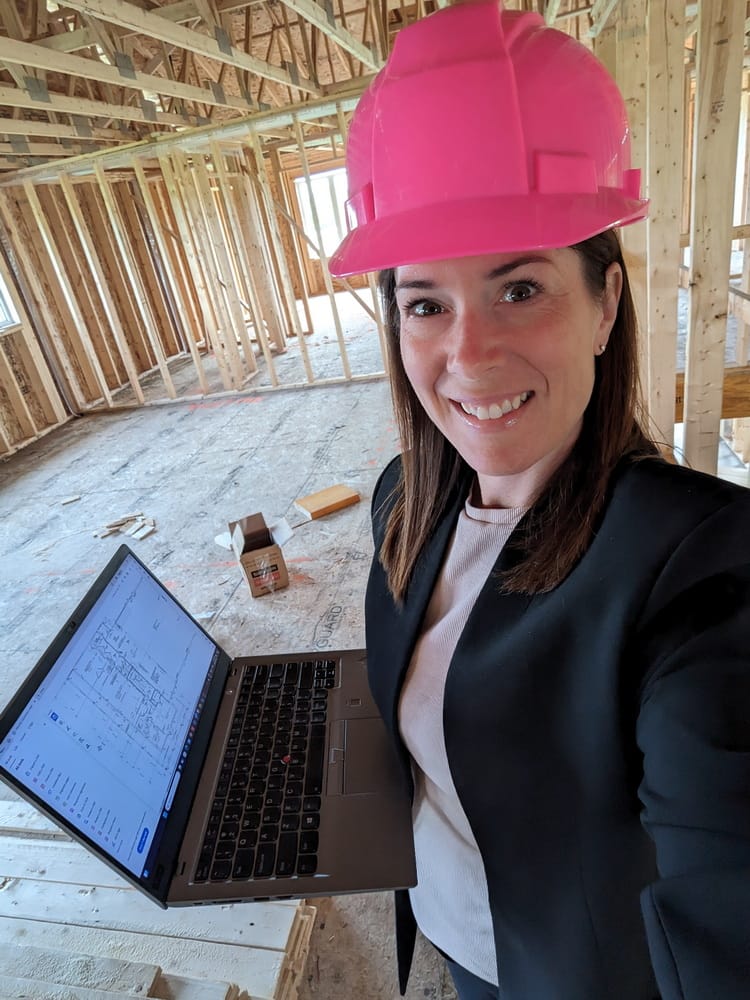
 Lianna Mackie has family roots in the trades, but her early career was in event planning. Since joining the family business, she has grown her role at Mackie Homes as the company has grown, from just a few homes a year to more than 500 across Eastern Ontario. Today she is the general manager.
Being a woman in this industry is “everything,” she says. “I’ve never felt more included. You walk into a room of amazing women like this and you feel that instant connection.”
One of the challenges for her has been balancing work demands with the needs of a young family. “Not only do you want to be seen as an equal at work, but at home as well. And all too often, women are the default parent. We’re the pickups, we are the lunches, etc. And by someone helping with that, it creates more time. I remember even at the GOHBA table, many moons ago, I wanted to be a part of the marketing committee and I couldn’t make it to the 7 a.m. meetings because I had to be at home with the kids.”
And then there’s the guilt. “I have had heavy guilt coming into summer when my kids are off school and I am less seen at the office. But I’m still just as present, I’m just elsewhere.
“COVID helped that along so that we can work a little more remotely, but I do have that guilt for not being seen physically there because I’m also caregiving at home. I’ve stopped feeling a little bit of guilt with that, too, because, you know what? I’m where I want to be and where I need to be, and I can do it.”
It’s important, she says, to be able to say “no,” particularly for those who are early in their career. “In a room full of key players, whether it be men, whether it be women, if you are young in your career, we want them to be like, ‘Yes, yes, I’ll do this, I’ll do this.’ But by saying ‘yes’ to all of that, you actually need to find where to say ‘no’ and it’s strategic.”
◊◊◊◊◊

 Kaylie Chamberlin grew up in and around the trades, spending three decades surrounded by the HVAC industry before realizing her true passion was in renovations. That led her to ultimately purchase the established businesses ARTium Design Build and sister company Just Basements in 2025.
The incorrect assumptions she has seen lean more toward the consumer side of the business rather than internally within the industry.
“I’m going into people’s homes, and I’m chatting with them about projects. And it’s always interesting to hear the feedback from homeowners … not all homeowners, of course, not to paint everyone with the same brush, but a lot of male homeowners are like, ‘You’re going to sell me a renovation project? What do you know about construction?’ You get this body language read from them.”
That’s where confidence comes in, she says. “They’ve had five quotes through the door, I’m the last one and they’re doing business with me because I was more thorough, more professional, more empathetic. I read into all of the things that likely the people who had been through the home before me had not.”
She feels it hasn’t been that long since the industry has shifted to be more women friendly. “I can remember my very first position at a mechanical contracting company, one of the individuals on my team who was a man saying, ‘Well, there’s the group chat that you’re in and then there’s the group chat that’s the guys,’ and the guys are doing the golf and the old boys’ club.
“And that was not that many years ago, so I feel like we’ve seen a huge evolution even in the last five years from where things started.”
Acknowledging that many at the table identified their father as their first mentor, she says hers was, too. “But as women at this table, we are now going to be the mentors for daughters, nieces, etc., so 20 years from now it’d be nice to ask the question and have all the women at the table say, ‘Oh my mom was my mentor paving the way for me in the construction industry.’”
◊◊◊◊◊
Postscript
 A 10th industry leader who could not attend the roundtable discussion subsequently sent her comments.
Monica Singhal is a principal and director at the large-volume builder Richcraft and shares duties running the company that was founded by her father, Kris, with her sister, Angela.
“I’ve been given an incredible gift to be a part of the legacy my father created,” she says. “My sister and I have a father who inspired us to not be afraid of a boardroom, share our ideas, and lead with heart and mind.
“Leading with heart and mind is what sets women apart in the real estate industry. It’s our secret sauce.”
While she feels the industry is still a male-dominated one, it is evolving.
“Change takes patience and time, and I feel like we are moving forward.”