As Canada’s housing market moves through 2026, economic uncertainty and weaker consumer confidence are expected to continue influencing how and where people buy homes. Across Ottawa, many buyers are placing greater emphasis on overall value, leading them to look beyond the city core to some top Ottawa suburbs and outlying communities that offer more living space, newer housing stock and family-oriented amenities.
Many households are also thinking more carefully about long-term affordability and whether a property will continue to meet their needs several years from now. That shift is helping drive continued demand in Ottawa’s suburban communities.
In my conversations with clients, I’m seeing more households think carefully about long-term affordability and whether a property will continue to meet their needs several years from now.
Top Ottawa suburbs attracting buyers in 2026
Communities like Stittsville, Barrhaven, Kanata, Orléans and Rockland remain popular, especially among families and move-up buyers who want a balance of newer housing, green space, schools and community amenities.
Affordability remains a factor in buying decisions but, in my experience, many clients are now weighing overall value and quality against what’s available closer to the core. Work arrangements are also shaping what buyers prioritize, though not in the way they were a few years ago.
As of early July, most federal public servants in the National Capital Region are now required to be on site four days a week, up from three, under a policy change that took effect that month; executives returned to the office full time back in May. Some departments are still phasing in the new requirement through September due to office space shortages, but commuting downtown is once again becoming a regular part of life for a large share of Ottawa’s workforce.
That’s making commute distance and highway or transit access a bigger factor in where buyers choose to settle, which helps explain why suburbs with strong connections to the core continue to see the steadiest demand.
Stittsville remains one of Ottawa’s most sought-after suburbs, particularly for families and professionals working in Kanata’s technology sector or Ottawa’s west end. The community offers a mix of newer subdivisions and established neighbourhoods, along with highly regarded schools, recreation facilities, parks and growing retail options.
The City of Ottawa projects a growth from about 41,000 residents in 2022 to more than 69,000 by 2034 as new residential development continues, reflecting the strong demand that has made Stittsville one of the city’s fastest-growing communities. For many buyers, the biggest draw is simply getting more living space and newer homes than they would typically find closer to downtown.
Barrhaven has grown into one of Ottawa’s largest suburban communities and continues to appeal to a range of buyers. According to the city’s year-end 2025 population estimates, Barrhaven’s east and west wards together are home to more than 107,700 residents, underscoring how quickly the community has expanded over the past two decades.
Today, buyers are attracted to its variety of housing, from condos and townhomes to larger detached homes, as well as the schools, shopping centres, recreation facilities, parks and expanding transit connections. The range of housing options makes Barrhaven attractive to both first-time buyers and growing families.
Kanata remains one of Ottawa’s strongest suburban markets thanks to its proximity to one of Canada’s largest technology hubs. According to the city’s population estimates, Kanata North and Kanata South wards together are home to nearly 98,000 residents, making it one of the National Capital Region’s largest suburban communities.
Beyond employment opportunities, Kanata offers mature neighbourhoods, newer residential developments, highly regarded schools, recreation facilities, shopping and access to extensive green space. Those factors continue to support strong demand from professionals, families and move-up buyers.
In Ottawa’s east end, Orléans is appealing to buyers who want suburban living while maintaining relatively convenient access to downtown. Statistics Canada’s 2021 census reported a population of 139,309 for the Orléans federal electoral district, an 8.6 per cent increase from 2016, making it one of Ottawa’s largest suburban communities. More recently, the city’s estimates put the combined population of the Orléans wards at nearly 149,000 residents, reflecting continued growth in the community.
One of the area’s strengths is its diversity. Buyers can choose between long-established neighbourhoods with mature trees and larger lots or newer developments in the eastern and southern parts of the community. Parks, schools, shopping, recreation facilities and the eastward expansion of Ottawa’s LRT continue to support long-term demand.
Beyond Ottawa: Rockland, Carleton Place, Arnprior and Kemptville
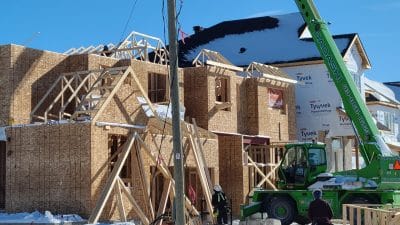
More households have now started looking farther outside Ottawa, particularly toward communities like Rockland, in search of larger homes, newer properties and more outdoor space than they can find closer to the city at similar price points. This kind of value appeals especially to younger families and buyers seeking longer-term flexibility and, for many homebuyers, the trade-off of a longer commute is worth the added space and affordability.
Rockland’s broader municipality, Clarence-Rockland, has already seen steady growth, climbing from 24,512 residents in the 2016 census to 26,505 in 2021, an increase of about 8.1 per cent, according to StatCan. The City of Clarence-Rockland also projects that growth will continue, forecasting an increase of nearly 5,000 residents, or about 18 per cent, between 2021 and 2036.
Carleton Place, about 40 minutes southwest of downtown, has already seen strong growth, up roughly 17 per cent between the 2016 and 2021 censuses, from 10,644 to 12,517 residents, and Lanark County’s planning department projects the town will keep growing, reaching nearly 21,000 people by 2038, driven largely by younger families priced out of Ottawa.
Arnprior, northwest of the city along the Ottawa River, has become increasingly popular with homebuyers thanks to its combination of affordability, waterfront setting and improved highway access to Ottawa. The average house price in Arnprior was $399,995 in February 2026, well below the provincial average of $802,601, giving buyers considerably more purchasing power than they’d find closer to the city.
Its location along the Ottawa River also offers a scenic, small-town feel, while newer subdivisions have added modern, turnkey housing options to a market that was previously dominated by older resale homes. This combination of value, lifestyle and convenient commuting distance has helped drive steady population growth from 8,795 in 2016 to 9,629 in 2021 and has continued to appeal to residents since.
Kemptville, about 50 kilometres south of downtown Ottawa in the municipality of North Grenville, is part of one of the fastest-growing areas in the region as well, with North Grenville’s population having already grown by 9.4 per cent between the 2016 and 2021 censuses as more buyers relocate from Ottawa in search of affordable, rural-adjacent living.
Why more buyers are choosing the suburbs
Demand for central Ottawa neighbourhoods remains strong, but suburban communities continue to stand out for buyers looking to balance lifestyle, space and long-term value. As borrowing costs and economic uncertainty continue to shape purchasing decisions, many homebuyers are taking a more measured approach to where they choose to live.
Buyers are prioritizing practicality, future growth and homes that can support changing needs over time. For many Ottawa-area buyers heading into 2026, suburbs like Stittsville, Barrhaven, Kanata, Orléans and other outlying communities are offering the balance of space, lifestyle and practicality they are looking for.